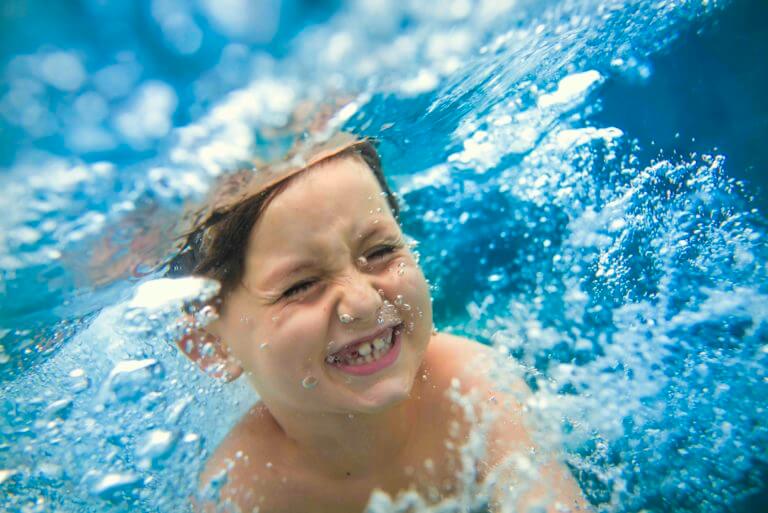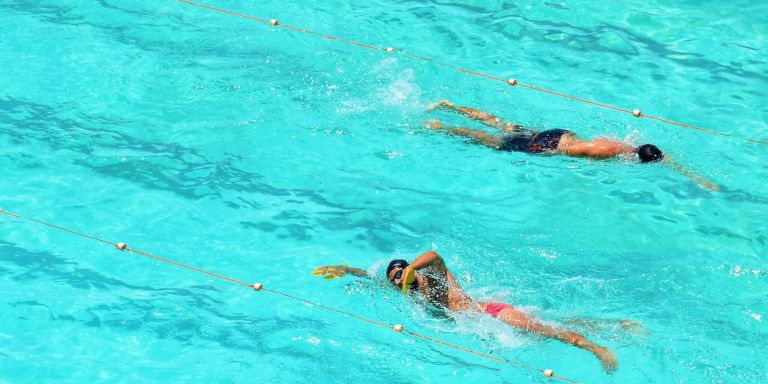


Yes. Most people with well-controlled asthma or allergies can swim, and swimming is often one of the easier forms of exercise for people with asthma. A 2013 Cochrane review of 8 trials found that swimming training did not worsen asthma control in children and teens with stable asthma, and it improved their fitness and lung function.
The part to watch is pool air. When chlorine reacts with sweat, pee and other material from swimmers, it forms disinfection byproducts called chloramines, which can irritate the eyes, nose and lungs, especially at indoor pools with poor ventilation. That matters for a lot of people: about 27.8 million people in the U.S. had asthma in 2023, including 4.8 million children, according to CDC’s most recent national asthma data.
This article is general information, not medical advice. Talk with your doctor or allergist about your own asthma or allergy plan before starting a new exercise routine.
Is swimming good exercise for people with asthma?
Swimming is one of the exercises least likely to bring on asthma symptoms. The American Academy of Allergy, Asthma & Immunology (AAAAI) says swimming is considered less likely to cause asthma symptoms because the warm, humid air at a pool does not aggravate the airways the way cold, dry air can. AAAAI notes that people with exercise-induced bronchoconstriction (EIB) are typically very sensitive to low temperatures and dry air.
The research on swimming training points the same way. The 2013 Cochrane review by Beggs and colleagues pooled 8 trials with children and teens 18 and under. Swimming training was well tolerated, improved fitness and gave small improvements in resting lung function, and the authors found no evidence that it harmed asthma control. The trials were small, and 4 of the 8 did not report whether their pools were chlorinated, so the review could not compare pool types.
Can chlorinated pools cause asthma in children?
The studies disagree, so it helps to look at both sides.
- Studies that found a link: A 2003 Belgian study of 1,881 schoolchildren (Bernard and colleagues, Occupational and Environmental Medicine) found that asthma and exercise-induced bronchoconstriction were more common in children who had spent more total time at indoor chlorinated pools. The authors called for more research to test the link.
- Studies that did not: A larger 2011 study of 5,738 British children in the ALSPAC cohort (Font-Ribera and colleagues, American Journal of Respiratory and Critical Care Medicine) found that swimming did not increase the risk of asthma or allergic symptoms. Children who swam the most had better lung function, and lower odds of current asthma showed up mainly in children who had wheezed early in life. The authors noted they could not rule out other factors, such as overall activity level.
Taken together, swimming in a well-run pool is not a reason for most children with asthma to stay out of the water, while heavy exposure to poor indoor pool air is worth avoiding. For more on children, see Pool Chlorine and Kids: What Parents Should Know About Chloramines, Asthma and Skin.
Can you be allergic to chlorine?
A true chlorine allergy is unlikely. The American College of Allergy, Asthma and Immunology (ACAAI) says, “You can’t be allergic to chlorine, but you can be sensitive or have a reaction.” Skin reactions after swimming are usually irritant dermatitis, and chlorine can dry the skin and irritate existing dermatitis.
ACAAI also points out that what feels like a chlorine allergy might be underlying asthma or exercise-induced bronchoconstriction. Coughing, chest tightness, wheezing, a runny or stuffy nose and sneezing at the pool are worth raising with an allergist, so the cause can be treated and you can keep swimming.
Why do indoor pools bother some people’s lungs?
Indoor pool air is where most of the irritation comes from. According to the CDC’s guidance on chloramines and pool operation, chlorine reacts with pee, poop, sweat and dirt from swimmers to form chloramines. Chloramines release gas into the air, and because the gas is heavier than air, it settles just above the water where swimmers breathe. CDC says the buildup is worse indoors, especially in winter, when pools limit fresh air to save on heating. Chloramines irritate the skin, eyes and respiratory tract of swimmers, spectators and staff.
That strong “chlorine” smell at an indoor pool is usually chloramines. Our guide to what causes pool chlorine smell and how to get rid of it explains the chemistry. People who spend many hours a week in indoor pool air, such as elite swimmers and lifeguards, report breathing problems more often. Read why so many elite swimmers have asthma and one former swimmer’s story of how chloramines affected her lungs.
How can people with asthma or allergies swim more comfortably?
These steps come from AAAAI, ACAAI and CDC guidance:
- Follow your asthma plan. Talk with your doctor or allergist before starting a swim program. AAAAI says a short-acting inhaler taken before exercise, when prescribed, prevents EIB symptoms in 80 to 90% of patients.
- Warm up and cool down. AAAAI recommends staying hydrated, warming up and cooling down. For children, share the asthma management plan with coaches and swim instructors.
- Pick pools with fresh air. Outdoor pools and well-ventilated indoor pools usually have less chloramine buildup. If a pool has a strong chemical smell, CDC suggests telling the lifeguard or pool operator.
- Shower before you swim and use the restroom first. CDC says rinsing off and never peeing in the water keeps the material that forms chloramines out of the pool.
- Rinse after swimming. ACAAI suggests washing skin with clean water to remove any remaining irritant.
What can pool owners and operators do to reduce irritants in pool air?
CDC’s chloramine guidance lists steps for operators: move fresh air across the water’s surface and exhaust chloramine-laden air outdoors, measure combined chlorine (total chlorine minus free chlorine), superchlorinate when combined chlorine is too high, and consider supplemental systems such as UV or ozone that break down chloramines.
Clear Comfort’s hydroxyl-based AOP is another supplemental option. Hydroxyl-based AOP works alongside a low chlorine residual, so pools can run low-chlorine instead of relying on chlorine alone. In residential pools, the typical free chlorine range with hydroxyl-based AOP is 0.5 to 1.5 ppm. At aquatic facilities, Clear Comfort case studies have reported 50% to 90% reductions in chloramines and other disinfection byproducts, depending on the facility. In one example, a 2015 YMCA case study found 84.8% lower levels of one major group of disinfection byproducts after Clear Comfort was added, based on lab testing at the University of Colorado Boulder (case-specific result).
Learn how hydroxyl-based AOP technology works, or see options for home pools and spas and aquatic facilities.
Frequently asked questions
Is chlorine bad for asthma?
Chlorine in a well-run pool is not a reason for most people with asthma to avoid swimming. The bigger issue is chloramines, the byproducts that form when chlorine reacts with sweat and pee, which can irritate the airways in poorly ventilated indoor pools. A 2013 Cochrane review found swimming training did not worsen asthma control in children and teens.
Can swimming trigger an asthma attack?
Any exercise can trigger symptoms in people with exercise-induced bronchoconstriction, but AAAAI says swimming is less likely to cause asthma symptoms because pool air is warm and humid. Strong chemical smells at indoor pools can still irritate the airways. Following your asthma plan and using a prescribed pre-exercise inhaler lowers the risk.
Is it possible to be allergic to chlorine?
A true chlorine allergy is unlikely. ACAAI says people can be sensitive to chlorine or have an irritant reaction, such as red, itchy skin. Breathing symptoms at the pool may point to underlying asthma or exercise-induced bronchoconstriction, which an allergist can help manage.
Are outdoor pools better than indoor pools for people with asthma?
Outdoor pools usually have less chloramine buildup because the gas can escape into open air. CDC says chloramine buildup is worse indoors, especially in winter when fresh air is limited. A well-ventilated indoor pool can also work well for swimmers with asthma.
Can kids with asthma take swim lessons?
Most children with stable asthma can swim. The 2013 Cochrane review found swimming training was well tolerated and improved fitness and lung function in children and teens with stable asthma. Share your child’s asthma management plan with the swim instructor and check with your child’s doctor first.
Want fresher pool air and water at home? See how Clear Comfort works for residential pools and spas.