

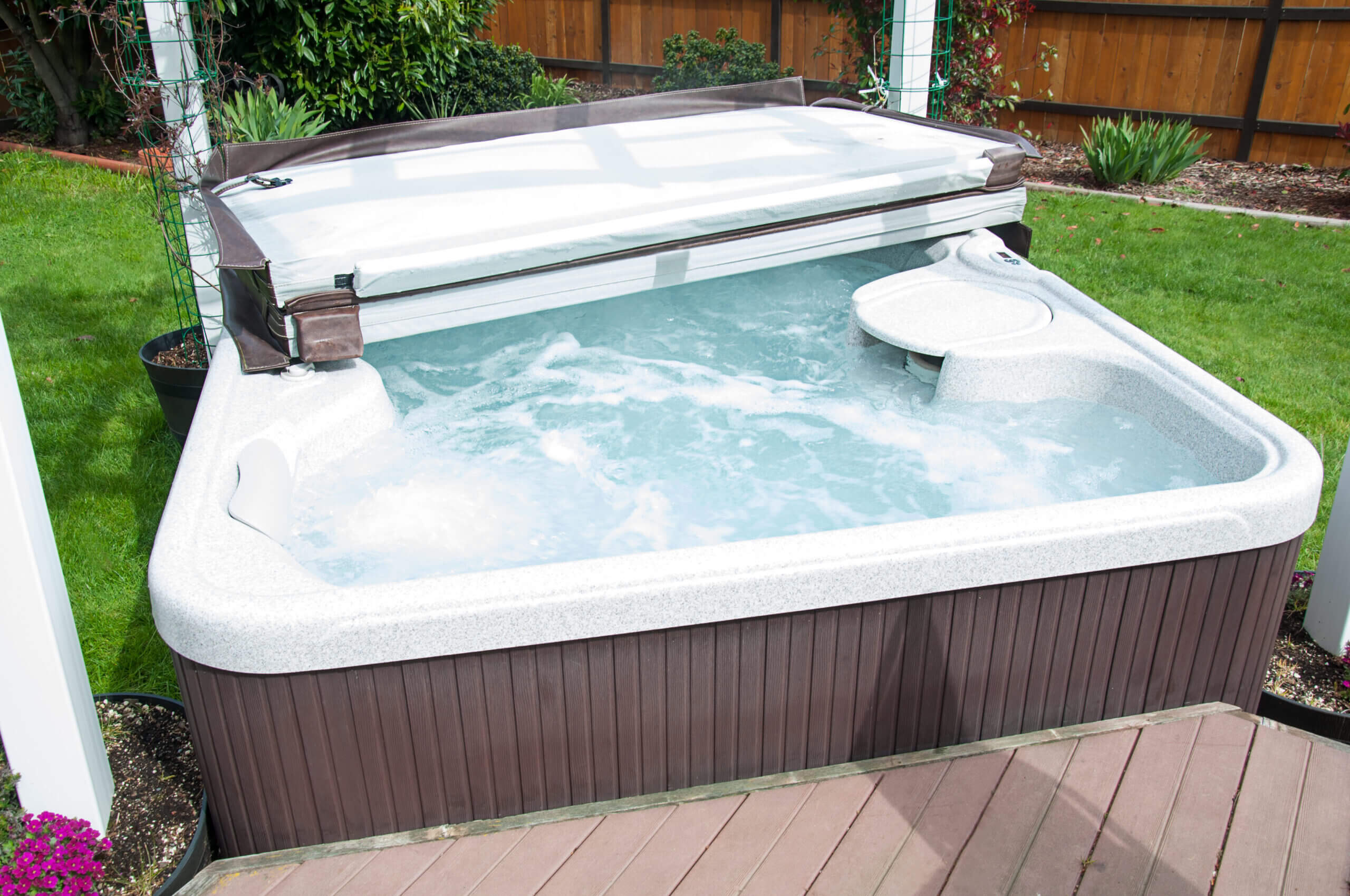
Every hot tub needs a sanitizer, almost always chlorine or bromine, because warm, jetted water can spread germs that cause skin, lung and stomach illness. CDC’s 2025 guidance for hot tubs calls for free chlorine of at least 3 ppm or bromine of 4 to 8 ppm, a pH of 7.0 to 7.8 and water no hotter than 104°F (CDC, 2025).
This guide covers why hot tub water needs treatment, how chlorine and bromine compare, what a strong chemical smell means and how to keep a home hot tub clean with less sanitizer.
Does hot water kill bacteria in a hot tub?
No. Hot tub water is warm enough to help some germs grow. CDC lists 77°F to 113°F as a temperature range where Legionella bacteria grow, along with biofilm and low disinfectant levels (CDC, How Legionella Spreads, 2025). Hot tubs run at up to 104°F, which sits inside that range.
Hot tub jets also turn water into mist. CDC says people can get Legionnaires’ disease or Pontiac fever when they breathe in hot tub mist that contains Legionella (CDC, 2025). In CDC’s report on 208 U.S. outbreaks tied to treated recreational water from 2015 to 2019, Legionella caused 65 outbreaks and all 13 deaths, and 50 of the 71 outbreaks at hotels and resorts were linked to hot tubs (Hlavsa et al., MMWR, 2021).
Skin infections are the other common problem. Hot tub rash is caused by Pseudomonas aeruginosa, a germ commonly found in the environment, and shows up as an itchy, red, bumpy rash a few days after sitting in a poorly kept hot tub (CDC, 2025). Keeping chlorine or bromine at the right level, with the right pH, is the main defense against both.
Chlorine vs bromine: which is better for a hot tub?
Both chlorine and bromine work in a hot tub when they are kept in range. CDC gives a target for each and treats them as equal options (CDC, 2025):
- Chlorine: free chlorine of at least 3 ppm. CDC tells hot tub users to talk to the operator or owner if a reading is above 10 ppm.
- Bromine: 4 to 8 ppm. CDC tells users to speak up if a reading is above 8 ppm.
- pH for either one: 7.0 to 7.8.
Hot tubs need higher sanitizer levels than pools. The 2021 MMWR report notes that the higher hot tub minimums in the Model Aquatic Health Code (3 ppm chlorine and 4 ppm bromine) account for disinfectant loss from higher water temperatures and from the mist made by hot tub jets (Hlavsa et al., MMWR, 2021).
For a home hot tub, the better choice is usually the sanitizer your spa maker recommends and the one you will test and adjust consistently. A tub that holds a steady chlorine or bromine level is safer than one that swings between too much and too little.
Why does my hot tub smell like chemicals?
 A strong chemical smell usually means the water needs attention. CDC says a properly chlorinated hot tub has little odor, and a strong chemical smell indicates a problem (CDC, 2025).
The smell comes from disinfection byproducts. When chlorine combines with sweat, pee, dirt, skin cells, deodorant and makeup, it uses up chlorine that would otherwise kill germs and creates chemical irritants (CDC, 2025). Lotion and cosmetics in a small, hot body of water add to that load. Our guide to disinfection byproducts in pools and what causes pool chlorine smell explain the chemistry in more detail.
How often should you test hot tub water?
Test hot tub water before you soak and on the schedule in your spa’s manual. CDC suggests checking disinfectant and pH with test strips (CDC, 2025), and it asks public hot tub operators to check at least twice a day, and more often when the tub is busy (CDC, 2025).
CDC’s operator checklist also includes removing slime or biofilm every day, replacing filters and replacing the water as the health department requires or the manufacturer recommends (CDC, 2025). Home owners can borrow the same habits; see how to get rid of hot tub biofilm slime.
How can I keep my hot tub clean with less chlorine or bromine?
You cannot safely run a hot tub with no sanitizer, but you can cut how much work the sanitizer has to do. CDC says chlorine or bromine kill most germs in properly treated water within minutes (CDC, 2025), so the goal is to keep a steady residual while keeping contaminants out of the water.
- Shower before you soak. CDC recommends a shower before getting in (CDC, 2025). Less sweat, lotion and makeup in the water means fewer byproducts and less sanitizer used up.
- Keep the filter and plumbing clean. Clean or replace the filter on the manufacturer’s schedule and clear out biofilm.
- Drain and refill on schedule. Old water holds more dissolved waste and is harder to keep balanced.
- Keep the cover on. A cover keeps out leaves, dust and pollen. See our hot tub care tips for energy and water savings too.
- Add a supplemental system. Clear Comfort’s hydroxyl-based AOP is a supplemental treatment that works alongside a low chlorine or bromine residual. Hydroxyl radicals break down contaminants in the water, so the sanitizer has less to react with. Learn how hydroxyl-based AOP works.
For home spas, the CCW25 is built for portable spas, swim spas, plunge pools and personal hot tubs up to 30 GPM, and the CCW50 treats inground spas and small pools up to 35 GPM. Maintenance is an annual cartridge exchange that takes approximately 1 to 5 minutes per year. Keep testing and keep a sanitizer residual at the level your spa maker and your Clear Comfort dealer recommend.
Who should be careful in a hot tub?
CDC says children younger than 5 should not use hot tubs, people who are pregnant should talk to a healthcare provider first, and no one should drink alcohol before or during hot tub use (CDC, 2025). People 50 or older, current or former smokers, and people with chronic lung disease or weakened immune systems are at higher risk of Legionella illness (CDC, 2025).
CDC also advises anyone who develops a cough, shortness of breath, fever or muscle aches within two weeks of using a hot tub to see a healthcare provider and mention the hot tub (CDC, 2025). For the benefits side of soaking, see the health benefits of hot tubs and spas.
Frequently asked questions
What chemicals do you need for a hot tub?
A hot tub needs a sanitizer, usually chlorine or bromine, plus a way to keep pH between 7.0 and 7.8. CDC’s 2025 hot tub guidance gives targets for both sanitizers and for pH. Test strips let you check all three before you soak.
What should chlorine and bromine levels be in a hot tub?
CDC recommends free chlorine of at least 3 ppm or bromine of 4 to 8 ppm in a hot tub, with pH between 7.0 and 7.8. CDC tells users to talk to the owner or operator if chlorine reads above 10 ppm or bromine above 8 ppm.
Can you use a hot tub without chlorine or bromine?
No. Warm, jetted hot tub water can spread germs like Legionella and Pseudomonas, so CDC calls for a chlorine or bromine residual. A supplemental system such as Clear Comfort’s hydroxyl-based AOP breaks down contaminants so the tub can run with less sanitizer, but it does not replace the residual.
Why does my hot tub smell like chlorine?
A strong chemical smell usually means disinfection byproducts have built up in the water. CDC says a properly chlorinated hot tub has little odor. Test the water, shower before soaking and follow your spa’s schedule for shocking, draining and refilling.
Can you get sick from a hot tub?
Yes. A poorly maintained hot tub can spread germs that cause hot tub rash, Legionnaires’ disease and stomach illness, according to CDC. Keeping the sanitizer and pH in range, cleaning the filter and showering before use lower the risk.
Ready for fresher hot tub water with less sanitizer? See the CCW25 AOP spa system or find a Clear Comfort dealer.