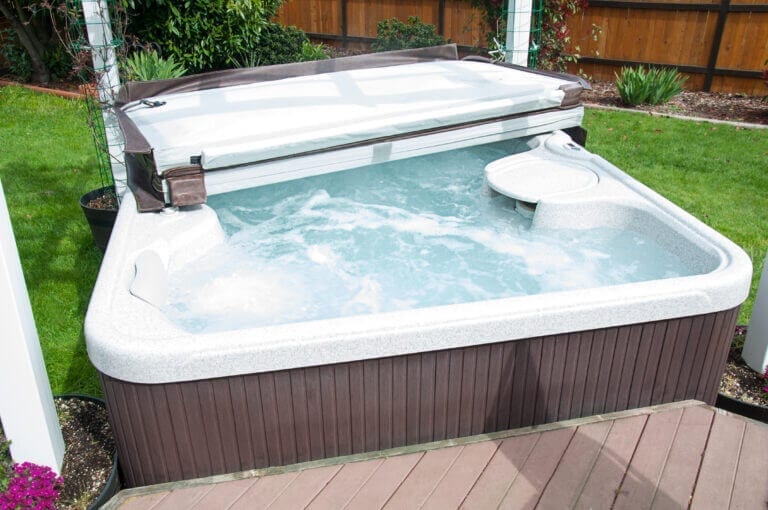


The simplest ways to care for a hot tub are to keep a tight cover on it, hold the water at or below 104°F, keep a steady sanitizer level, clean the filter on schedule and drain only when the water needs it. These habits cut energy and water use and keep the water clean and comfortable.
How do you save energy with a hot tub?
A hot tub uses energy all year to stay warm, even when no one is in it. The Appliance Standards Awareness Project estimates that a typical 334-gallon spa that meets current state efficiency standards uses more than 200 watts of standby power, or about 1,900 kWh a year (ASAP). Most of the savings come from keeping that heat in:
- Keep the cover on and sealed. A cover that fits snugly against the lip of the tub holds heat in and keeps leaves and dirt out of the water. Fasten the straps, and replace a cover that is cracked, torn or waterlogged. California requires the cover sold with a new portable electric spa made on or after June 1, 2019, to be tested with that spa (California Energy Commission).
- Add a floating blanket. A thermal blanket on the water under the hard cover adds insulation and helps the cover last longer.
- Turn the temperature down when you are done. Lower the setting after use and when you will be away for more than a week, then bring it back up before your next soak.
- Block the wind. A fence, hedge or privacy panel cuts the heat the water loses to wind.
What temperature should a hot tub be?
CDC says hot tub water should not be higher than 104°F (40°C) (CDC, 2025). The U.S. Consumer Product Safety Commission has advised since 1979 that 100°F is considered safe for a healthy adult and that pregnant women should stay at 100°F or below, because soaking in water above 102°F can cause fetal damage in the first three months of pregnancy (CPSC, 1979). Check the water with an accurate thermometer instead of trusting the control panel alone, and pregnant soakers should ask their doctor before using a hot tub.
How do you save water with a hot tub?
Most of the water a hot tub loses goes into the air. DOE’s Building America Solution Center says evaporation from the water surface is the main source of water loss in pools and spas, and that EPA recommends a cover for both (DOE Building America Solution Center, 2022). For pools, EPA WaterSense says a cover can prevent up to 95 percent of evaporation (EPA WaterSense, 2026). To save water:
- Keep the cover on whenever the tub is not in use.
- Fix leaks early. Small drips at fittings or under the cabinet add up.
- Skip the cannonballs. Splashing and jumping throw water out of the tub.
- Keep the water balanced and sanitized so you can drain less often.
How often should you drain and refill a hot tub?
Drain and refill based on how much the tub is used, not a fixed calendar. CDC’s Legionella guidance for public hot tubs gives a water replacement formula: days between water changes = (tub volume in gallons ÷ 3) ÷ average number of users per day (CDC, 2025). For a 400-gallon home tub used by two people a day, that works out to about 67 days. For a home tub, CDC also points owners to the manufacturer’s recommendations (CDC, 2026), and CDC’s guidance says to scrub all surfaces each time the tub is drained.
Before you drain, stop adding chemicals for a few days so the sanitizer can break down. EPA WaterSense’s pool guide suggests letting the water sit 48 to 72 hours without adding chemicals (EPA WaterSense, 2022). Then follow your local rules on where the water can go. The City of Portland, for example, asks owners to drain to the sanitary sewer or let the water soak into the ground, and never to send bromine-treated water to a storm drain (City of Portland Environmental Services).
What sanitizer levels does a hot tub need?
CDC recommends free chlorine of at least 3 ppm or bromine of 4 to 8 ppm, and a pH of 7.0 to 7.8 (CDC, 2025). A hot tub is harder to keep sanitized than a pool. CDC notes that low water volumes, high temperatures and heavy bather loads can lead to low disinfectant levels that let germs grow (CDC, 2025). Hot tub water also sits in the 77°F to 113°F range where Legionella grows best (CDC, 2025), and the germ Pseudomonas aeruginosa causes hot tub rash (CDC, 2025).
Test the water often, especially after a busy soak, and keep the sanitizer in range even when the tub is not in use, as CDC advises (CDC, 2026). After heavy use, a shock treatment breaks down body oils, sweat and other organic material. There are chlorine and non-chlorine shocks, so follow the label for the one that matches your sanitizer. For more on sanitizers, see our guide to hot tub chemicals, and if the walls feel slick, our guide to hot tub slime.
How do filters and showers keep hot tub water clean?
A clogged filter makes the pump work harder and leaves more debris in the water. Rinse and clean the filter on your manufacturer’s schedule, and replace it when it wears out.
Showering before you get in, as CDC recommends (CDC, 2025), rinses off sweat, lotion and other organic material that uses up sanitizer and can react with chlorine to form chloramines. After your soak, take off your swimsuit and shower with soap, which CDC recommends to help prevent hot tub rash (CDC, 2025). Keeping pH and sanitizer in range also protects the tub, because water that is out of balance is harder on heaters, jets and covers.
Can you keep a hot tub clean without chlorine or bromine?
No. A hot tub still needs a chlorine or bromine residual at the levels CDC recommends to protect soakers from germs. Supplemental treatment can lower how much of that sanitizer the tub uses. Clear Comfort’s CCW25 adds hydroxyl-based AOP to portable spas, swim spas, plunge pools and personal hot tubs with flow up to 30 GPM. The hydroxyls break down body oils, sweat and other contaminants as water passes through the system, which lets the tub run with a low chlorine or bromine residual and can mean fewer shock treatments. Maintenance is an annual cartridge exchange that takes approximately 1 to 5 minutes. A well-kept tub is also easier to enjoy for the health benefits of hot tubs, such as relaxation after a long day.
Frequently asked questions
How hot should a hot tub be?
CDC says hot tub water should not be higher than 104°F (40°C). CPSC considers 100°F safe for a healthy adult and advises pregnant women to stay at 100°F or below. Check the temperature with an accurate thermometer.
How often should I drain my hot tub?
CDC’s formula for public hot tubs divides the tub’s volume in gallons by 3, then by the average number of users per day, to get the days between water changes. A 400-gallon tub used by two people a day works out to about 67 days. For a home tub, also follow the manufacturer’s schedule.
What chlorine level should a hot tub have?
CDC recommends free chlorine of at least 3 ppm, or bromine of 4 to 8 ppm, with a pH of 7.0 to 7.8. Hot water and heavy use burn through sanitizer quickly, so test the water often.
Does a hot tub cover save energy and water?
Yes. A snug cover holds heat in and cuts evaporation, which DOE’s Building America Solution Center names as the main source of water loss in pools and spas. California requires the cover sold with a new portable electric spa to be tested with that spa.
Can I keep my hot tub clean without chlorine or bromine?
No. A hot tub still needs a chlorine or bromine residual to protect soakers from germs. Supplemental treatment such as Clear Comfort’s hydroxyl-based AOP breaks down contaminants so the tub can run with a low residual and can need fewer shock treatments.
Ready for easier hot tub water? See the CCW25 AOP spa system.