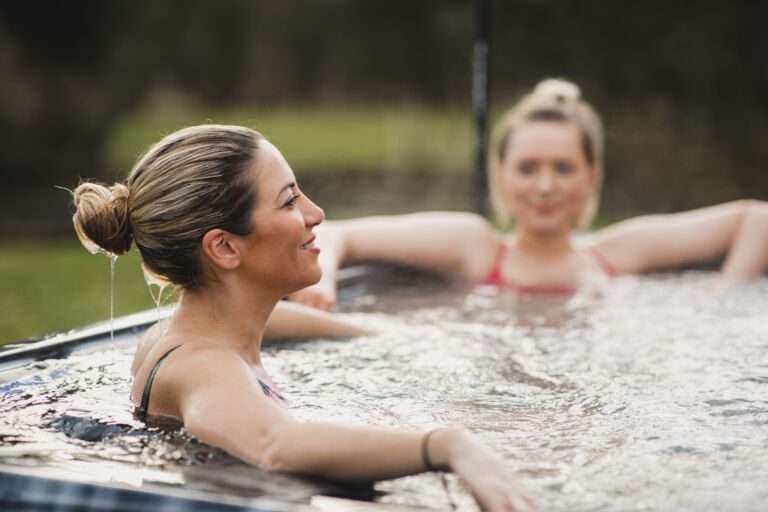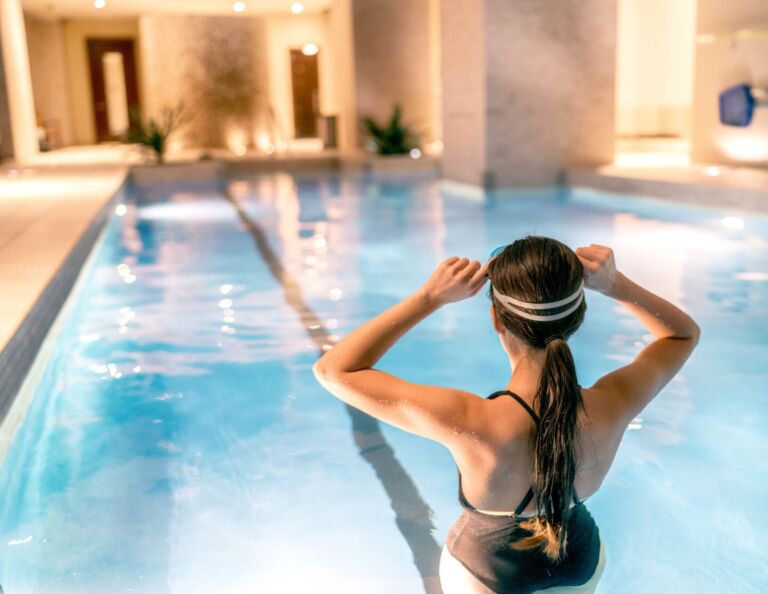


 Yes. Swimming and other water exercise are among the best ways for older adults to stay active, because water supports body weight and takes stress off the joints while the heart, lungs and muscles still get a real workout. Research also links swimming to better balance and fewer falls in older men, which matters because falls are the leading cause of injury for adults 65 and older.
How much exercise do older adults need each week?
The CDC’s physical activity guidelines for adults 65 and older (reviewed December 2025) call for at least 150 minutes of moderate-intensity aerobic activity every week, such as 30 minutes a day, 5 days a week. The same guidelines add at least 2 days of muscle-strengthening activity and regular activities that improve balance.
Swimming laps, water walking and water aerobics count as moderate aerobic activity for most people. Pushing and pulling against water also adds resistance, so a pool session can work toward more than one of the CDC targets.
Why is swimming easier on the joints?
Water holds up much of your body weight, so swimming puts far less pounding on the knees, hips and feet than running or long walks on pavement. The CDC lists walking, biking, swimming and water activities as good non-drug ways to ease arthritis pain. CDC says adults with arthritis can reduce pain and improve function by about 40% through regular physical activity, and recommends 150 minutes of moderate activity per week for people with arthritis too.
For older adults with sore feet, stiff joints or past injuries, a pool is often the place where exercise stops hurting enough to keep doing it. Warm water can help stiff joints loosen up; see what pool temperature works best for different kinds of swimming.
Can swimming help prevent falls in older adults?
Falls are a serious risk at this age. According to CDC falls data (updated September 2026), more than 14 million older adults, about 1 in 4, report falling every year, and the fall death rate among older adults rose 21% between 2018 and 2024.
Swimming may help. A 2014 study in the American Journal of Epidemiology followed 1,667 Australian men with an average age of 76.8. The 88 men who swam had about half the fall rate of men who did not. After the researchers adjusted for other activity and known fall risk factors, swimmers still had about a one-third lower fall rate, and swimming was the only activity linked to fewer falls. Swimmers also had less postural sway on balance tests, and adding balance to the model explained much of the difference.
This was one study of men, and it shows an association; it does not prove that swimming prevents falls. The result fits the study’s own finding that swimmers had steadier balance.
Is swimming good for brain health and dementia risk?
Regular exercise is one of the better-supported ways to protect brain health, and swimming is an easy way for many older adults to get it. The Alzheimer’s Association’s 2026 Facts and Figures report estimates that 7.4 million Americans age 65 and older are living with Alzheimer’s, about 1 in 9 people in that age group.
The 2024 Lancet Commission on dementia named 14 modifiable risk factors, including physical inactivity, and estimated that addressing them could prevent or delay nearly half of dementia cases. That finding covers physical activity in general. No study has shown that swimming on its own prevents Alzheimer’s, so the best reading is that swimming is a good way to meet activity goals that support brain health.
What kinds of water exercise work well for older adults?
- Lap swimming: steady aerobic exercise at your own pace. Any stroke counts, and rest breaks at the wall are fine.
- Water walking or jogging: walking in chest-deep water builds leg strength and balance with little impact.
- Water aerobics classes: group classes add structure and social time, which helps many people stick with exercise.
- Strength moves in the pool: arm sweeps, leg lifts and kickboard work use the water’s resistance in place of weights.
For more routines, see these pool exercises you can do at home or at the gym.
How can older adults swim safely?
- Check in with your doctor first if you have a heart or lung condition, recent surgery, or balance problems, and ask what intensity is right for you.
- Start slowly: begin with short sessions a few times a week and add time as it gets easier.
- Swim with others around: choose pools with a lifeguard, or swim with a friend or family member.
- Watch the edges: use handrails and pool stairs, and wear water shoes if the deck or pool floor is slippery.
- Drink water and rest between sets, since you can sweat in a pool without noticing.
Why does pool water quality matter for older swimmers?
The way a pool is treated affects how comfortable it is to swim in every day. The CDC explains that when chlorine combines with sweat, urine and dirt from swimmers, it forms irritants called chloramines, which can cause red, itchy eyes, skin irritation and rashes. CDC also notes that if you smell “chlorine” where you swim, you are probably smelling chloramines. A one-minute shower before swimming removes most of the dirt and sweat that help form them.
For home pools, a supplemental system such as Clear Comfort’s hydroxyl-based AOP lets the pool run as a low-chlorine pool. Clear Comfort pools still keep a low chlorine residual, typically 0.5 to 1.5 ppm free chlorine, and the system’s maintenance is an annual cartridge exchange that takes approximately 1 to 5 minutes per year. To learn how lower chlorine levels can change the swim, read how to lower chlorine in your pool.
Frequently asked questions
Is swimming better than walking for older adults?
Both are good choices, and the best one is the one you will keep doing. Swimming is easier on the joints and lowers the risk of falling during exercise, while walking adds weight-bearing activity that helps bones. Many older adults do both during the week to meet the CDC’s 150-minute goal.
How often should seniors swim?
The CDC recommends at least 150 minutes of moderate activity a week for adults 65 and older, plus muscle-strengthening on at least 2 days. That could be 30 minutes of swimming or water aerobics on 5 days. Beginners can start with shorter sessions and build up.
Is water aerobics as good as swimming laps?
Water aerobics is a good workout for most older adults and counts toward weekly aerobic goals at moderate effort. It is also easier to start than lap swimming because you stand in the water and do not need strong stroke skills. Lap swimming usually raises the heart rate more, so mixing the two works well.
Is it too late to start swimming at 70 or 80?
It is not too late. Water supports the body, so people can start at almost any age and fitness level, beginning with water walking or short swims. Check with a doctor first if you have heart, lung or balance problems, and consider adult swim lessons if you are not a confident swimmer.
Is swimming good for arthritis?
Yes. The CDC lists swimming and water activities as good non-drug ways to ease arthritis pain, and says regular activity can reduce pain and improve function by about 40% in adults with arthritis. Warm water can make movement more comfortable for stiff joints.
Want a home pool that is easier on eyes and skin? See how Clear Comfort works for residential pools.