

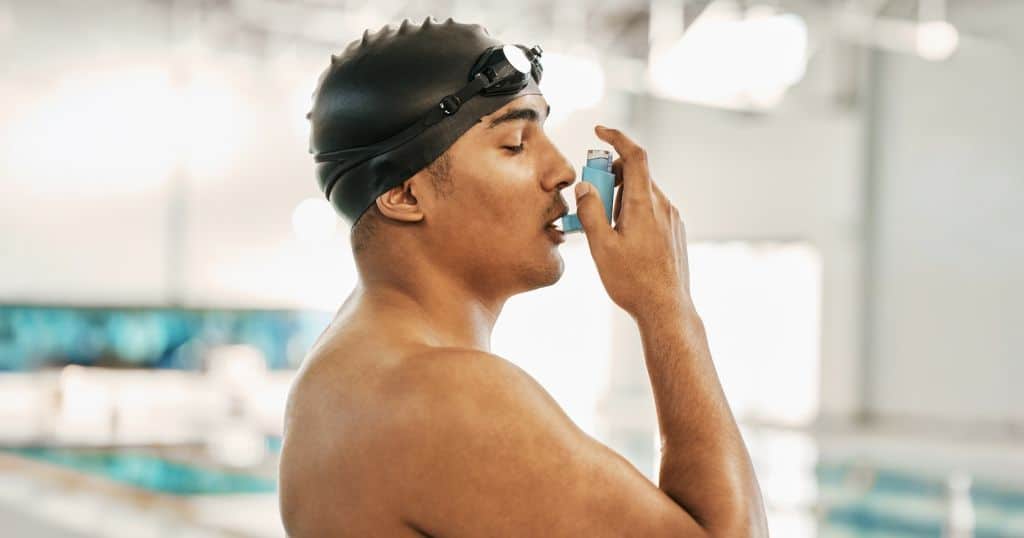
If you manage a commercial swimming pool, you’ve probably dealt with air quality complaints. Swimmers say their eyes burn, parents mention the “strong chlorine smell,” and staff cough when spending long hours on deck. The truth is, what people smell isn’t chlorine at all – it’s chloramines.
High chloramine levels don’t just create unpleasant odors. They reduce water quality, damage HVAC systems, and create serious health risks for swimmers and staff. The good news? There are real solutions for chloramines, and with the right strategies, operators can dramatically improve both air and water quality.
This guide will explain:
- What chloramines are and how they form
- Health risks from chloramine exposure in indoor pools
- Why your pool smells like chlorine
- How to test and measure combined chlorine levels
- Proven strategies to reduce chloramines in commercial pools and improve air quality
What Are Chloramines and How Do They Form?
Chloramines are unwanted byproducts formed when chlorine reacts with nitrogen compounds brought in by swimmers, such as sweat, urine, lotions, and personal care products. As a result, chloramines build up and cause odor, irritation and poor indoor air quality.
Instead of killing bacteria and keeping water clean, chlorine binds with these contaminants, forming combined chlorine, more commonly known as chloramines.
There are three types:
- Monochloramine (NH₂Cl): First stage, less irritating but still unwanted.
- Dichloramine (NHCl₂): Stronger odor and irritation potential.
- Trichloramine (NCl₃): The gas responsible for the strong “pool smell” and most health complaints.
Chloramine Exposure Risks in Indoor Pools
High chloramine levels affect both health and infrastructure:
- Respiratory problems: Burning eyes, coughing, and worsened asthma symptoms. Prolonged exposure may lead to “lifeguard lung,” a hypersensitivity pneumonitis condition.
- Skin and eye irritation: Red, itchy skin and irritated eyes.
- Poor indoor pool air quality: Chloramines are heavy vapors that hover right where swimmers breathe.
- Facility corrosion: Chloramines damage HVAC equipment, ductwork, and metal structures.
Why Does My Pool Smell Like Chlorine?
That strong odor is not free chlorine – it’s trichloramine escaping into the air. A properly managed pool with balanced free chlorine has little to no smell.
When people say “this pool has too much chlorine,” the opposite is usually true: there’s not enough free chlorine, and chloramines are taking over.
How to Test and Measure Combined Chlorine Levels
To control chloramines, you need to measure them.
- Test Free Chlorine (FC): The active disinfectant.
- Test Total Chlorine (TC): Includes both free chlorine and chloramines.
- Calculate Combined Chlorine (CC):
CC=TC−FCCC = TC – FCCC=TC−FC
Standards to Aim For
- Free Chlorine: 1.0–4.0 ppm (as code requires)
- Combined Chlorine: ≤ 0.2 ppm (≤ 0.5 ppm in many state codes)
Anything above 0.5 ppm means corrective action is needed.
How to Reduce Chloramines in Commercial Pools
Here are the most effective ways to cut chloramines and improve both pool air quality and water conditions.
1. Maintain Proper Chlorine & pH Balance
- Keep free chlorine steady in the target range.
- Maintain pH 7.2–7.6 for best chlorine efficiency.
- Use ORP controllers for automated dosing to avoid swings.
2. Breakpoint Chlorination (Shocking the Pool)
When combined chlorine climbs, superchlorination can help.
- Rule: Raise free chlorine to 10x the CC level.
- Example: If CC = 0.5 ppm, raise FC to 5 ppm.
- Allow levels to return to normal before reopening.
3. Supplemental Oxidation Systems (Proven Technology)
Many successful facilities install secondary systems to target chloramines more effectively:
- UV Pool Systems: Medium-pressure UV destroys chloramine molecules in recirculating water.
- Ozone Pool Systems: Ozone neutralizes chloramine precursors before they bind with chlorine.
- AOP Pool Systems (Advanced Oxidation Process): Creates hydroxyl radicals – the most powerful oxidizers available. AOP is one of the fastest and most complete ways to reduce chloramines.
4. Reduce the Source of Contaminants
Prevent chloramines before they form by controlling what enters the water:
- Require pre-swim showers.
- Keep restrooms accessible and clean to discourage urination in the pool.
- Educate swimmers on hygiene – especially during lessons and camps.
- Control bather load to match circulation and filtration capacity.
5. Improve Water Circulation & Filtration
- Maintain turnover rates per code (4-6 hours for pools, 30 minutes for spas).
- Backwash and clean filters regularly.
- Adjust return flow patterns to avoid dead spots where contaminants build.
6. Optimize Indoor Air Handling
Indoor facilities often experience the worst odor complaints because chloramines build at the surface. To optimize and help improve indoor pool air quality, your facility needs:
- Ventilation: Pull air across the deck surface, not just from the ceiling.
- Fresh air exchange: Meet or exceed ASHRAE fresh air standards.
- Humidity control: Keep 50–60% RH to protect structures and improve comfort.
7. Train Staff & Monitor Daily
- Test chlorine and combined chlorine several times per day.
- Train operators to respond when CC exceeds 0.5 ppm.
- Track trends – persistent high chloramines often point to deeper issues like undersized systems or poor airflow.
Real Solutions for Chloramines
Aquatics operators don’t have to accept constant odor complaints or irritated swimmers. There are real solutions for chloramines – and they work. Facilities that implement these strategies consistently see:
- Fewer odor and irritation complaints
- Stronger compliance with health codes
- Improved swimmer satisfaction and loyalty
- Longer building and equipment lifespan
- Better pool air quality for staff and guests
Conclusion: Taking Back Control
If your commercial pool “smells like chlorine,” what you’re really smelling is a chloramine problem. However, left unchecked, chloramines damage health, facilities, and reputation.
The key to solving this problem is a comprehensive approach: strong primary disinfection, supplemental oxidation (UV, ozone, AOP), swimmer hygiene, circulation improvements, and effective air handling.
By combining these methods, aquatics operators can solve odor complaints, protect swimmer health, and create a safe, enjoyable environment.
Bottom line: You can reduce chloramines in commercial pools – and the payoff is cleaner water, fresher air, and a healthier facility.

Louie Warco
Customer Success Manager