
Food manufacturers invest heavily in food safety. They validate sanitation procedures, monitor critical control points, and maintain rigorous standards throughout their facilities.
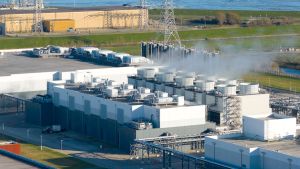
Yet many food safety plans have a blind spot. It sits just outside the production floor – in the cooling tower.
Cooling towers rarely contact food products directly. But they can become reservoirs for biofilm and microbial growth. Left unmanaged, that growth can affect facility hygiene, operational reliability, and environmental conditions in ways that matter to auditors, regulators, and food safety teams alike.
What Is Biofilm in a Cooling Tower?
Biofilm is a community of microorganisms that attach to surfaces and produce a protective matrix – commonly called “slime.” It forms wherever water, nutrients, and a surface meet consistently.
Inside a cooling tower, biofilm can develop on:
- Fill media
- Basin surfaces
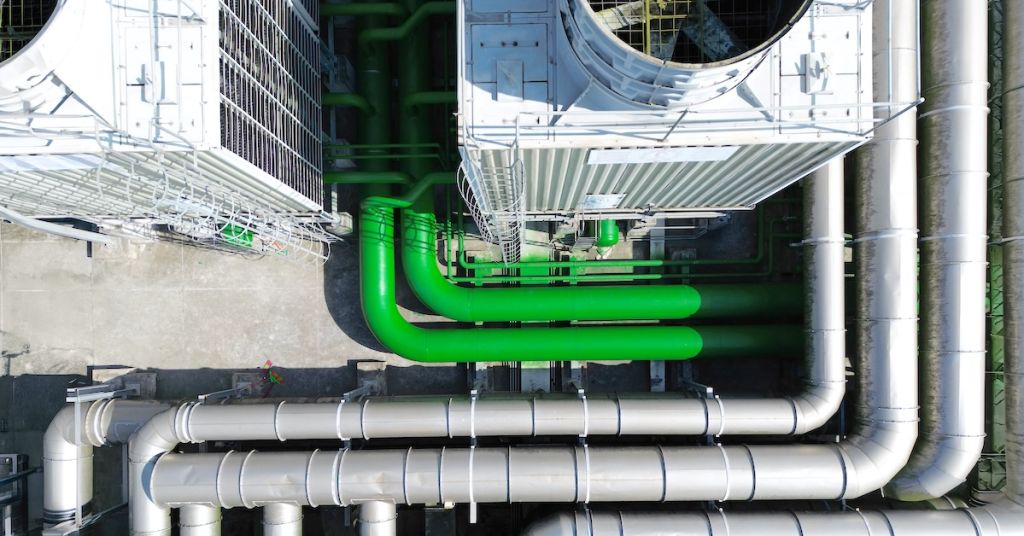
- Piping and heat exchangers
- Drift eliminators
- Any other wetted component
Once established, biofilm is difficult to eliminate. The protective matrix shields microorganisms from disinfectants and environmental stress. Bacteria inside a biofilm can be significantly more resistant to treatment than free-floating organisms in the same water.
Why Cooling Towers Are Ideal Environments for Microbial Growth
Cooling towers are designed to move large volumes of warm, oxygenated water. That process also draws in airborne contaminants – dust, pollen, organic matter, and microorganisms – through the airflow required for heat rejection.
The result is a system that continuously introduces biological material into warm, wet conditions. Without effective control measures, that environment can support the growth of:
- Bacteria, including opportunistic pathogens
- Algae and fungi
- Mold
- Established biofilm communities
One pathogen worth specific attention is Legionella pneumophila, the bacterium responsible for Legionnaires’ disease. Cooling towers are one of the most well-documented amplification points for Legionella in built environments.
How Cooling Tower Contamination Connects to Food Safety
Many food safety teams treat cooling towers as maintenance assets. They are managed by facilities or engineering, not by quality or food safety.
That separation creates risk.
Cooling towers are part of the broader facility environment. Biological contamination in utility systems can contribute to:
- Increased microbial loading in the air around the facility
- Aerosolized water droplets carrying microorganisms into adjacent spaces
- Greater difficulty in maintaining environmental hygiene standards
- Elevated risk during third-party audits and regulatory inspections
Standards like SQF, GFSI-recognized schemes, and FSMA’s Preventive Controls rule require facilities to evaluate all reasonably foreseeable hazards. A cooling tower with uncontrolled biological growth is a foreseeable hazard. Whether it appears in a current food safety plan is another question.
Environmental monitoring programs often focus on production zones. Utility systems that influence site-wide conditions tend to receive less attention – until an audit or an incident makes them visible.
What Happens When Biofilm Goes Unaddressed
The consequences of uncontrolled biofilm are not limited to microbiological risk.
Operationally, biofilm acts as an insulating layer on heat transfer surfaces. As it accumulates:
- Energy consumption increases
- Cooling performance degrades
- Chemical demand rises
- Corrosion accelerates
- Maintenance intervals shorten
A thin layer of biological fouling can meaningfully reduce system efficiency. For food manufacturers operating on tight production schedules, an unexpected cooling system failure is a costly disruption – not just a maintenance issue.
From a food safety standpoint, the stakes are higher. Facilities that cannot demonstrate control over utility systems during a GFSI or customer audit may face findings, corrective action requests, or – in serious cases – suspension of certification.
Why Chemical Treatment Alone Often Falls Short
Many cooling towers rely primarily on chemical biocides for biological control. Biocides remain important tools, but they face a fundamental limitation once biofilm is established.
The protective matrix surrounding mature biofilm limits disinfectant penetration. Microorganisms survive beneath the surface and continue to multiply. Facilities often respond by increasing chemical dosages. The underlying problem remains.
Effective biofilm control requires more than chemistry. It requires a layered strategy that addresses:
- Prevention: reducing conditions that allow biofilm to initiate
- Monitoring: detecting biological activity before it becomes established
- Physical removal: eliminating existing deposits that chemical treatment cannot fully penetrate
- Sustained control: maintaining water quality between treatment events
No single intervention accomplishes all four. Programs that rely on one method tend to manage symptoms rather than the system.
What a Comprehensive Cooling Tower Water Management Program Looks Like
Facilities that successfully control cooling tower biofilm typically combine several strategies:
- Routine Monitoring: Regular testing establishes a biological baseline and identifies trends over time. Early detection prevents small problems from becoming large ones.
- Filtration: Removing suspended solids reduces the nutrients and attachment surfaces that support microbial growth. Side-stream filtration is a common approach in high-load environments.
- Mechanical Cleaning: Physical removal of deposits – particularly from fill media and basin surfaces – eliminates established biofilm that chemical treatment cannot reach. Cleaning schedules should be tied to system conditions, not just the calendar.
- AOP: Advanced oxidation technology generates powerful oxidizing molecules that move through the system and act on microorganisms and biofilm at points where conventional biocides may not reach. When integrated into a broader water management program, it can improve biological control while reducing dependence on high chemical volumes.
The goal of any program is consistent, measurable control – not reactive treatment after problems appear.
Questions Food Safety Teams Should Be Asking About Their Cooling Towers
If a facility operates one or more cooling towers, these questions are worth raising in the next food safety review:
- When was the last time biofilm levels were formally evaluated?
- Are biological trends being tracked over time, or only tested reactively?
- Is the cooling tower included in the facility’s hazard analysis and risk assessment?
- Are utility systems reviewed during food safety team meetings?
- Does the current treatment program address prevention, not just correction?
- Would additional monitoring or treatment technology improve confidence in the system?
If several of these questions do not have clear answers, that is useful information.
Closing the Gap in Facility-Wide Food Safety
Food safety thinking has evolved significantly. Facilities now recognize that contamination risk can originate far from the production line – in raw materials, in employee practices, in environmental conditions.
Cooling towers belong in that conversation.
They are not on the production line. But they are part of the facility ecosystem that supports everything on it. Proactive monitoring, effective water management, and a layered treatment strategy can improve system performance, reduce operational risk, and strengthen the overall hygiene posture of a facility.
The most effective food safety programs do not wait for problems to appear. They identify where risks could develop and manage them before they do. For many facilities, the cooling tower is one of those places.
Is your cooling tower a blind spot in your food safety plan?
You don’t have to wait for an audit finding to find out. Talk to our water treatment specialists about a cooling tower assessment that evaluates biofilm levels, current treatment performance, and where your program may fall short of FSMA and GFSI expectations.
Frequently Asked Questions
Can a cooling tower contaminate food products directly?
Cooling towers rarely contact food products directly. The more relevant risk is indirect through aerosolized droplets, increased environmental microbial load, and conditions that make facility-wide hygiene harder to maintain.
What pathogens are most associated with cooling tower biofilm?
Legionella pneumophila is the most widely regulated pathogen linked to cooling towers. Other organisms of concern include Pseudomonas aeruginosa, heterotrophic bacteria, and various fungi and molds. The specific risk profile depends on facility type, climate, and system design.
Does FSMA require cooling tower management in a food safety plan?
FSMA’s Preventive Controls for Human Food rule requires facilities to identify and control reasonably foreseeable hazards. Whether a cooling tower represents a covered hazard depends on a facility’s specific risk assessment. Facilities operating under GFSI-recognized standards may face more explicit expectations.
Why doesn’t chemical treatment solve the biofilm problem?
Established biofilm produces a protective matrix that limits how deeply disinfectants can penetrate. Microorganisms inside the matrix can survive standard chemical treatment. Effective control typically requires combining chemistry with physical cleaning, filtration, and monitoring.
How often should a cooling tower be tested for biological activity?
Testing frequency depends on system size, load, and risk profile. Many water management guidelines recommend at minimum monthly microbiological testing, with more frequent monitoring during high-demand periods or following system changes. Facilities subject to specific regulatory requirements – such as those in New York City, which mandates quarterly Legionella testing – should follow applicable local rules.