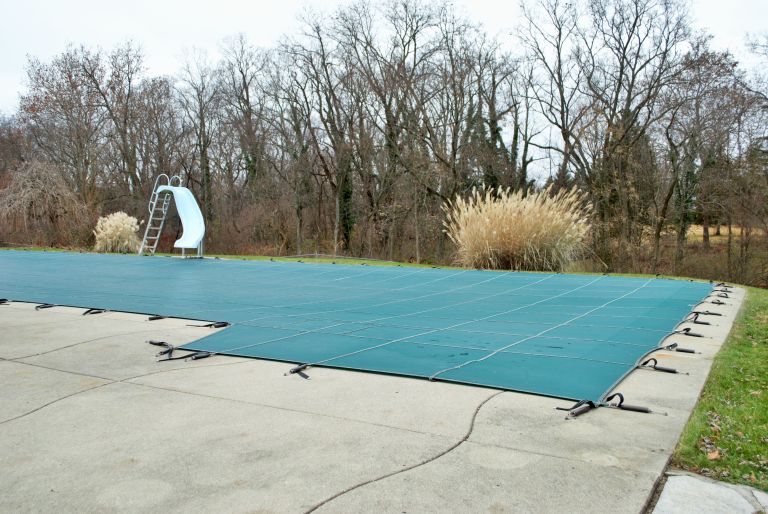


The best way to keep a pool looking new is to keep its water balanced, brush and vacuum it every week, clean the filter when the pressure says it is time, keep chlorine in the right range, cover it when it is not in use and fix small problems early. Balanced water does the most to protect plaster, vinyl, tile and metal equipment, because water that is out of balance either eats into surfaces or leaves scale on them.
Here is how each step protects the finish and equipment you paid for.
1. Why is balanced water the most important step for pool surfaces?
Pool water that is out of balance damages the pool from the inside. Water with low pH, low alkalinity or low calcium hardness tends to etch plaster and corrode metal parts such as heaters, ladders and light rings. Water with high pH or high calcium hardness tends to leave scale and cloudy water.
CDC’s guidelines for keeping a pool safe and healthy (reviewed 2025) list a pH of 7.0 to 7.8. The Oregon Health Authority’s pool water quality standards (OAR 333-062-1000, checked November 2026) give these ideal ranges:
- pH: 7.2 to 7.6
- Total alkalinity: 60 to 180 ppm
- Calcium hardness: 200 to 400 ppm
- Cyanuric acid (stabilizer): 30 to 50 ppm
Test the water regularly with a test kit or strips, and follow your pool builder’s targets if they differ for your surface. Our quick guide to home pool chemistry explains what each reading means.
2. How often should you brush and vacuum a pool?
Brush and vacuum a pool at least once a week, even when the water looks clean. Brushing loosens the film and early algae that settle on walls, steps and tile before they can stain, and vacuuming removes the dirt and debris that would otherwise sit on the floor.
Choose a brush made for your surface, since a stiff brush that works on plaster can scratch a vinyl liner or fiberglass. Empty the skimmer and pump baskets each time so water keeps moving through the filter.
3. When should you clean or replace a pool filter?
Clean a cartridge or DE filter when its pressure gauge reads 8 to 10 psi above the clean starting pressure. Intermatic’s filter cleaning guidance says cleaning intervals are based on pressure, not operating time. Write down the gauge reading right after each cleaning so you know your starting point. For a sand filter, follow the manufacturer’s backwash instructions.
Cleaning too often can be as unhelpful as cleaning too late, because a slightly dirty filter traps fine particles better than a just-cleaned one. Pool supplier Leslie’s cartridge guidance says to replace a cartridge when the material is visibly breaking down, an end cap is cracked, or oils will not come out with a cartridge cleaner.
4. Can chlorine damage a pool’s surfaces?
Chlorine kept in the range on the product label does not harm a well-balanced pool, but concentrated chlorine resting on a surface can. Chlorine or bromine tablets left in a floater that drifts against the wall, or granular shock that settles on the floor before it dissolves, can bleach a vinyl liner or fade a finish. Dissolve or add products exactly as the label directs, and keep tablets in a feeder or skimmer, never loose in the pool.
Running the pool at lower chlorine levels also means less chlorine contact with the finish. A Clear Comfort hydroxyl-based AOP system is a supplemental system: it adds hydroxyl-based oxidation to the water so a pool can run on a low chlorine residual, with typical free chlorine of 0.5 to 1.5 ppm. A low chlorine residual is still needed. Maintenance is an annual cartridge exchange that takes approximately 1 to 5 minutes per year. Learn how it works on our hydroxyl-based AOP technology page.
5. Does a pool cover help a pool last longer?
A cover keeps leaves, dirt and sun off the water, which means less scrubbing and fewer chances for stains. According to the U.S. Department of Energy’s Energy Saver guidance on pool covers, a cover can reduce the make-up water a pool needs by 30% to 50%, reduce the pool’s chemical consumption by 35% to 60% and reduce cleaning time by keeping dirt and debris out.
Use a cover during the swim season when the pool is not in use, and a safety cover during the off-season. Our guide to closing a pool for winter covers the winter steps that protect plumbing and surfaces from freezing.
6. How should you store pool chemicals so they don’t damage your equipment?
Store pool chemicals where they cannot leak, mix or give off fumes onto equipment. CDC’s pool chemical safety guidance (2025) says to store pool chemicals below 95°F, out of direct sunlight, dry, in their original labeled containers and separately from each other, and to keep the storage area secured from children and animals.
Our pool chemical safety guide explains how to handle and store them at home.
7. What small pool problems should you fix before they get bigger?
Fix stains, scale, cloudy water and slow leaks as soon as you notice them. A small stain or a thin scale line is easier to remove than a set-in one, and a slow leak can wash out soil and damage the pool structure over time.
Our guide to common pool problems and how to solve them covers filters, cloudy water, algae, stains and scaling, and Swimming Pool Leak Detection 101 shows how to find a leak.
Frequently asked questions
What is the best way to keep a pool looking new?
Keep the water balanced, brush and vacuum weekly and clean the filter when its pressure rises. Balanced water does the most to protect plaster, vinyl, tile and metal equipment from etching, corrosion and scale.
What pH should a swimming pool be?
CDC’s 2025 guidelines list a pool pH of 7.0 to 7.8, and the Oregon Health Authority’s pool standards call 7.2 to 7.6 ideal. Test regularly and adjust slowly to stay in range.
How often should you clean a pool filter?
Clean a cartridge or DE filter when the pressure gauge reads 8 to 10 psi above its clean starting pressure, according to Intermatic’s filter guidance. Cleaning is based on pressure, not on a set number of days.
Can chlorine tablets damage a pool?
Yes, if they sit on a surface. A floater that drifts against the wall or a tablet resting on the floor can bleach a vinyl liner or fade a finish, so keep tablets in a feeder or skimmer.
Does a pool cover protect the pool?
Yes. A cover keeps debris and sun off the water, and the U.S. Department of Energy says a cover can cut a pool’s chemical consumption by 35% to 60% and reduce cleaning time.
Want a pool that runs on less chlorine? Explore Clear Comfort for home pools and spas.