
Fall pool maintenance comes down to six jobs: a thorough cleaning, keeping leaves out, cleaning the filter, adjusting the heater, testing the water as conditions change, and planning for the first freeze. Doing them while the weather is still mild keeps the pool easy to care for through the rest of the season and makes closing or winter care simpler.
Here is what to do for each one.
1. What should you clean in the fall?
Start with a full cleaning once the busy summer season winds down. Take out pool toys and floats, clean them and store them dry. Vacuum the floor, brush the walls, steps and tile line, and clean the pool deck so dirt and leaves do not blow or wash back into the water.
A clean start makes every other fall task easier, since less debris means less work for the skimmer, the filter and the sanitizer. For the everyday basics that keep water clear, see the five elements of a clean swimming pool.
2. How do you keep leaves out of a pool in the fall?
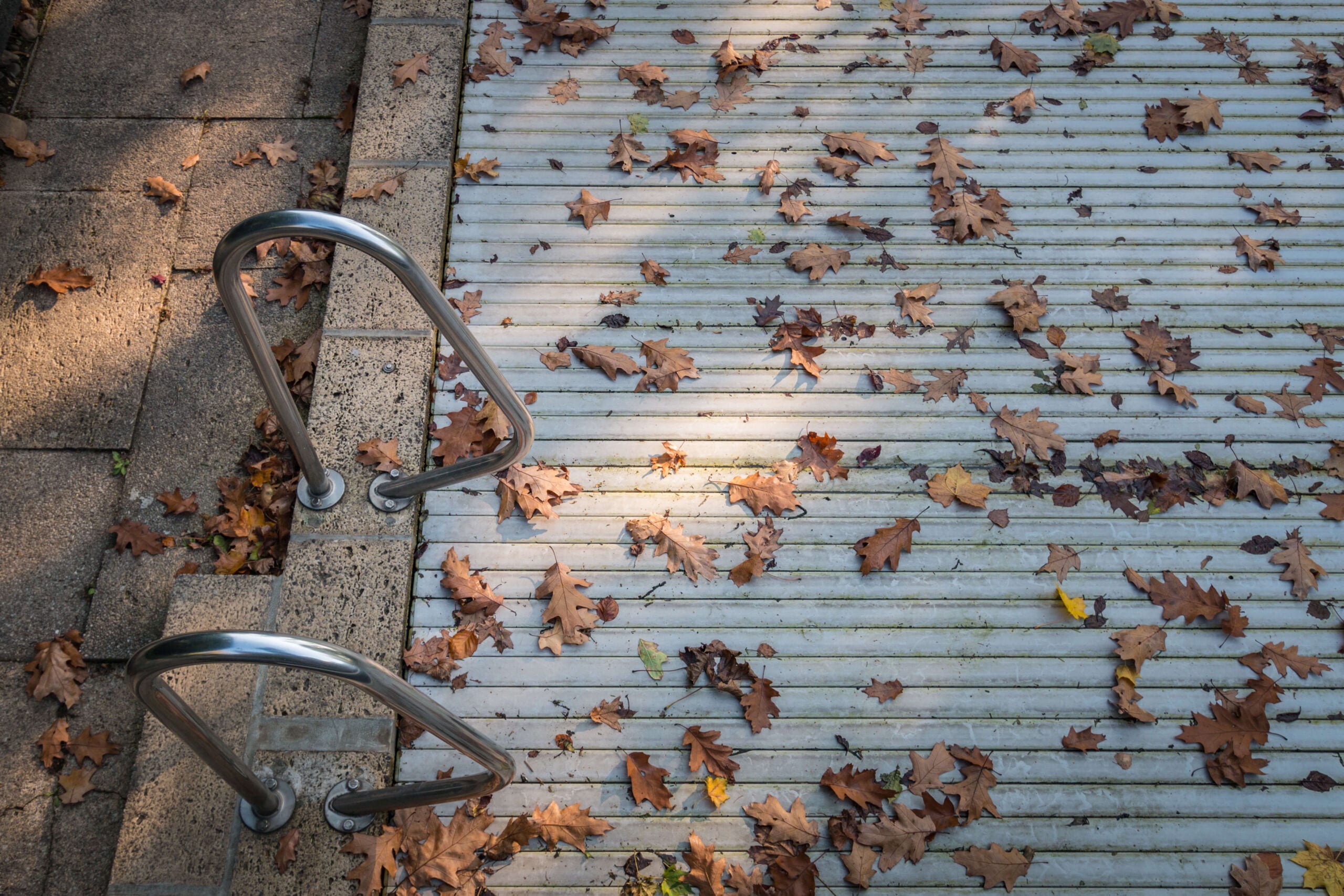
Leaf removal is the biggest fall job for most pools. Leaves that sit in the water feed algae and use up sanitizer, and leaves that sink can stain the pool floor if they are left too long.
- Empty the skimmer basket often, ideally every morning during heavy leaf weeks.
- Skim the surface with a leaf net before leaves sink, and vacuum any that reach the floor.
- Trim branches that hang over the pool where you can.
- If trees surround the pool, keep it covered when no one is swimming.
3. Should you clean your pool filter in the fall?
Yes. After a summer of heavy use, the filter has trapped a season’s worth of sweat, sunscreen and dirt, and fall adds leaves and debris on top of that. Clean or backwash the filter at the start of fall, following the manufacturer’s directions for your filter type, so circulation stays strong as the weather cools.
Watch the pressure gauge. When the reading climbs above the clean starting pressure, the filter needs attention. If your filter is worn out or you are thinking about a different type, read how to pick the right pool filter.
4. How do you heat a pool efficiently in the fall?
Cooler nights pull heat out of the water fast, so adjust the heater and cover the pool. The U.S. Department of Energy says using a pool cover when the pool is not in use cuts evaporation and could save up to 50% to 70% on pool heating costs.
The DOE also notes that most pools are kept at 78°F to 82°F, and each degree higher could cost 10% to 30% more in energy, depending on where you live. To keep fall heating costs down:
- Cover the pool at night and whenever no one is swimming.
- Set the heater to the lowest temperature your family is comfortable with.
- Turn the heater down or off when you will not use the pool for a few days.
5. How should pool water chemistry change in the fall?
Pool water chemistry still needs testing in the fall, and the results often change. The CDC (2024) notes that sunlight and swimmers use up sanitizer, so as days get shorter and fewer people swim, the amount you need to add can drop. Test and adjust based on the readings instead of keeping your summer routine.
The CDC recommends keeping pH between 7.0 and 7.8 and testing sanitizer and pH at least twice a day, and more often when many people are swimming. Keep the pump running on its normal schedule so treated water reaches every part of the pool, and recheck the water after storms, which add leaves, dirt and rain.
Fall is also a good time to look at how you treat the water. Clear Comfort’s hydroxyl-based AOP is supplemental treatment that works alongside a low chlorine residual, typically 0.5 to 1.5 ppm free chlorine, and a residual is still needed. Maintenance is an annual cartridge exchange that takes approximately 1 to 5 minutes per year.
6. How do you prepare a pool for the first freeze?
 Your plan depends on your climate. In cold regions, an early freeze can arrive before you expect it, and water left in pipes and equipment can freeze and crack them. Decide early whether you will close the pool or keep it open through the winter.
- Closing the pool for winter: follow the steps in how to close your pool, including lowering the water level, protecting the plumbing and covering the pool.
- Keeping the pool open in winter: see winter pool maintenance for a pool you keep open for freeze protection, pump run times and how often to test.
Whichever you choose, finish the cleaning, leaf and filter steps above first. A clean pool is easier to close and easier to open again in spring.
Frequently asked questions
When should I start fall pool maintenance?
Start when leaves begin to fall and nights get cooler, usually as the summer swim season winds down. Starting early keeps leaves and debris from building up before you close the pool or switch to winter care.
Do I need fewer chemicals in my pool in the fall?
Often, yes, but test before you change anything. The CDC notes that sunlight and swimmers use up sanitizer, so shorter days and less swimming can lower how much you need to add, while pH should still stay between 7.0 and 7.8.
Should I cover my pool in the fall?
Yes, whenever no one is swimming. A cover keeps leaves out, and the U.S. Department of Energy says it could save up to 50% to 70% on pool heating costs.
How often should I clean the skimmer basket in the fall?
Empty it often during heavy leaf weeks, ideally every morning. A full basket slows circulation and lets leaves sink to the floor, where they can stain the surface and feed algae.
Should I close my pool or keep it open in the winter?
It depends on your climate and how much you use the pool. If you expect hard freezes and will not swim, closing the pool protects the plumbing; if you plan to keep it open, you will need freeze protection and regular testing all winter.
Want a pool that is easier to care for in every season? See Clear Comfort’s home pool systems.