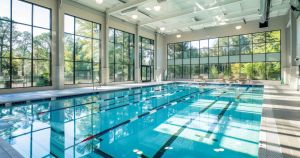


Owning a pool should feel relaxing, not exhausting. Yet many pool owners spend more time testing, scrubbing, and guessing than swimming. One week, the water looks cloudy. The next, it’s green or smells strongly of chlorine.
If this sounds familiar, you’re not alone.
Most pool water problems come from a few root causes. When left untreated, issues pile up quickly. The good news is that every common problem has a proven fix.
In this guide, you’ll learn how to fix the 10 most common pool water problems with expert tips and step-by-step solutions.
1. Cloudy Pool Water
The Problem:
Your water looks dull, hazy, or even milky. It’s the most common pool complaint and one of the most frustrating.
Cloudy water lingers when you don’t fix the root cause. Treating symptoms without fixing filtration or balance leads to repeated frustration. Cloudy pool water usually means fine debris stays suspended, bypassing the filter or reentering from swimmers and the environment.
Causes:
- Unbalanced water chemistry (pH, alkalinity, chlorine)
- A dirty or clogged filter
- Tiny particles or debris too small for your filter
- Heavy swimmer load, sunscreen, or organic contaminants
These factors usually work together, not in isolation. If one is off, clarity suffers quickly.
Expert Solution:
- Test your water – bring pH to 7.4-7.6, alkalinity to 80-120 ppm, and chlorine to 1-3 ppm.
- Clean or backwash your filter. A clogged filter can’t catch particles.
- Shock the pool with chlorine (3-5x normal dose) to oxidize contaminants.
- Run your pump 24 hours until water clears.
Balanced water chemistry allows chlorine to work effectively. Clean filtration removes particles instead of returning them to the water.
Pro Tip: Use a pool clarifier to bind tiny particles, or a flocculant to settle debris for vacuuming.
2. Green Pool (Algae Bloom)
The Problem:
You wake up to find your pool green, sometimes overnight. The color may range from a light tint to a dark, swampy green.
A green pool usually appears when sanitation falls behind environmental demand. Most of the time, algae spores already exist in the water. They become visible when chlorine cannot keep up.
Causes:
- Low or inconsistent chlorine levels
- Warm water and direct sunlight
- Poor circulation or dead zones
- High phosphates (algae food)
These conditions often overlap. When circulation and sanitation slip together, algae spreads rapidly.
Expert Solution:
- Test water – ensure pH is 7.2-7.4 before treatment
- Shock the pool heavily (5-10x normal dose) to kill algae
- Brush walls and floors to break algae’s grip
- Run the pump constantly until the water clears
- Add an algaecide once chlorine stabilizes
Shocking kills algae, but brushing and filtration remove it. Circulation prevents regrowth.
Pro Tip: Use a phosphate remover to starve algae long-term. Also, check circulation patterns – dead zones are algae’s best hiding spots.
3. Strong Chlorine Smell
The Problem:
Your pool smells strongly of chlorine, and swimmers complain of burning eyes or itchy skin.
That strong chlorine odor often leads owners to stop adding chlorine, which worsens the issue. The smell actually comes from chloramines (combined chlorine) when chlorine reacts with sweat, lotions or organic waste.
Causes:
- Chloramines formed from chlorine reacting to sweat, oils, lotions and other contaminants
- Incomplete oxidation of organic waste
- Sanitizer efficiency reduced by combined chlorine
- pH imbalance amplifying irritation effects
Expert Solution:
- Shock the pool to break down chloramines
- Improve circulation to prevent buildup
- Add a non-chlorine oxidizer or enzyme product weekly
- For indoor pools, improve ventilation
- Use an alternative sanitizer, like Advanced Oxidation (AOP), to back up chlorine
Pro Tip: Don’t keep adding chlorine tablets – test first. Combined chlorine levels above 0.2 ppm signal it’s time to shock.
4. Scaling and White Deposits
The Problem:
White crust around tile lines, cloudy streaks, or rough surfaces on plaster.
Scale forms slowly and often goes unnoticed until damage appears. Most commonly, minerals are falling out of solution and bonding to surfaces.
Causes:
- High calcium hardness
- High pH or alkalinity
- Evaporation concentrating minerals
These factors increase saturation and promote scale formation.
Expert Solution:
- Test calcium hardness and keep in ideal range 200-400 ppm
- Lower pH and alkalinity if too high
- Use a scale inhibitor to prevent buildup
- Gently clean with pumice stone or a diluted acid wash
Balanced water chemistry keeps minerals suspended. Prevention is far easier than removal.
Pro Tip: If you live in an area with hard water, add a sequestrant monthly to prevent scale.
5. Stains on Pool Surfaces
The Problem:
Unsightly stains that don’t brush off, in shades of brown, green or black. The water itself may still look clear.
Stains may look alike but have different causes. Treating the wrong type often makes them worse. Most stains are metal-based or organic, so identification matters.
Causes:
- Metals (iron, copper, manganese)
- Organic debris, like leaves, grass, etc.
- Algae stains embedded in plaster
Expert Solution:
- Test water for metals before treating
- Apply a metal sequestrant to keep metals in solution
- Use ascorbic acid (Vitamin C) to lift iron stains
- For organic stains, shock and brush vigorously
Pro tip: If a Vitamin C tablet fades the stain, it is metal-based.
6. Foam on Pool Surface
The Problem:
Foam or persistent bubbles collect on the water surface, especially after swimming.
Foam is often mistaken for a chemical imbalance. It usually indicates a buildup of oils and residue instead.
Causes:
- Body oils, lotions, sunscreen or hair products
- Low-quality or copper-based algaecides
- High swimmer load without enough sanitizer oxidation
Expert Solution:
- Shock the pool to oxidize organics
- Skim oils using enzyme treatments
- Avoid cheap algaecides – stick to polyquat 60
Pro Tip: Encourage your guests to shower before entering – it really helps.
7. Eye and Skin Irritation
The Problem:
Red eyes, itchy skin, or rashes after swimming.
Eye and skin irritation is often blamed on chlorine, but like “pool” odor, chloramines are the cause.
Causes:
- Unbalanced pH (too high or low)
- Chloramine buildup
- Inadequate sanitizer oxidation
- High organics in water
Expert Solution:
- Test and balance pH to 7.4-7.6.
- Shock to eliminate chloramines.
- Keep chlorine 1-3 ppm (.5-1.5 ppm if using Clear Comfort AOP) and CYA 30-50 ppm
- Shock regularly to break down chloramines
- Improve circulation and filtration to prevent buildup
Pro Tip: Don’t rely on smell – test kits or digital meters give the real picture.
8. Low Chlorine Levels (Even After Adding)
The Problem:
You add chlorine, but tests show none.
Adding chlorine when tests still read little or none creates a frustrating cycle. It feels like chlorine disappears, but chemical reactions consume it quickly.
Causes:
- Intense sunlight increases chlorine loss (low CYA)
- Too much stabilizer (chlorine lock)
- Heavy organic demand
Expert Solution:
- Test stabilizer – keep between 30-50 ppm
- If CYA is too high, dilute water with fresh fill
- Shock pool to burn through organics
Pro Tip: Use liquid chlorine or Cal-Hypo for shocking – avoid stabilized chlorine if CYA is already high.
9. High Chlorine Demand
The Problem:
Your pool “eats” chlorine faster than you can add it.
When chlorine disappears quickly, maintaining proper levels becomes expensive and time-consuming. High demand consumes sanitizer, and chlorine won’t hold until you fix it.
Causes:
- Algae, debris and other contaminants
- Heavy pool use with exposure to high swimmer bather load
- High nitrates or phosphates
- Dirty or nutrient-rich fill water
Expert Solution:
- Shock heavily to restore free chlorine
- Brush, vacuum and clean filters thoroughly to remove debris
- Test for nitrates and phosphates and treat if needed
- Partially replace water when demand cannot be reduced
- Add an AOP or other alternative sanitizer for less chlorine demand
Pro Tip: If demand continues, drain and refill partially – fresh water resets chemistry.
10. Poor Water Circulation
The Problem:
Dead spots, resulting in cloudy areas, algae in corners, or uneven sanitation, keep returning.
Circulation problems can persist even when test results look good. Dead zones trap organics, increasing chloramines and recurring issues.
Causes:
- Clogged skimmer or pump basket
- Inadequate pump runtime
- Misaligned return jets.
- Inefficient flow patterns
Expert Solution:
- Run your pump long enough – typically 8-12 hours/day in summer
- Angle return jets to push water downward and around the pool
- Clean baskets and filter regularly
- Upgrade to an energy-saving variable-speed pump for better efficiency and control
Pro Tip: Poor circulation is the root cause of many cloudy and green pool problems – fix this, and you solve multiple issues at once.
Fixing (and Preventing) Common Pool Problems
Pool water problems can feel overwhelming, but they’re rarely random. Nearly every issue – from cloudy water to a green pool – has a clear cause and a proven fix.
When these key basics stay in place, most problems resolve faster and return less often:
- Test and balance the water regularly
- Clean filters and maintain circulation
- Shock as needed to reset sanitizer levels
And remember – you don’t have to figure everything out on your own. Knowing what’s happening in your water and when to get help from local pros makes swimming pool maintenance easier. The result is easy pool maintenance, better water quality, and more time enjoying the pool instead of troubleshooting it.

Louie Warco
Customer Success Manager