
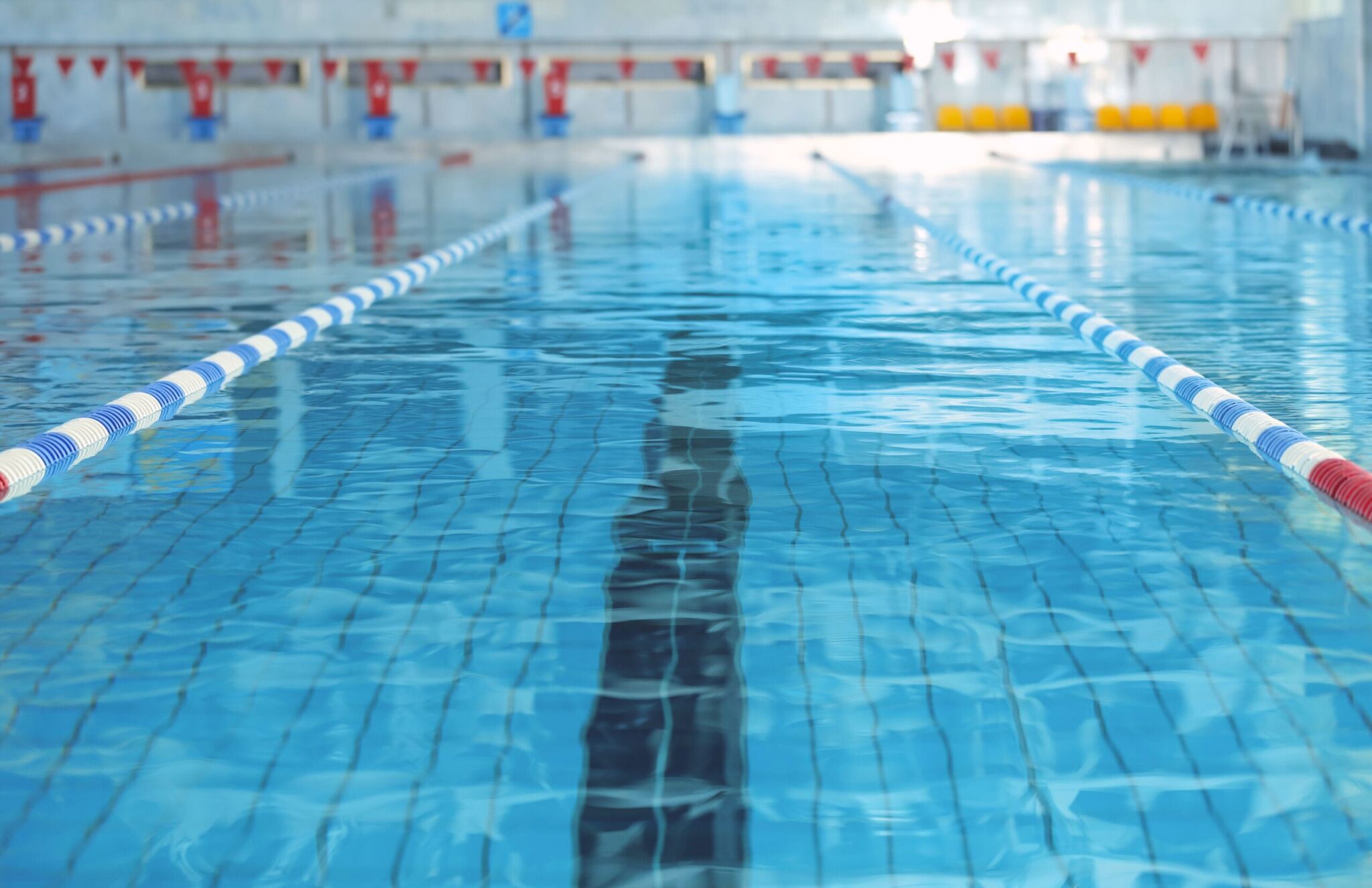
In a 2015 to 2016 case study at a YMCA in Boulder, Colorado, adding Clear Comfort’s hydroxyl-based AOP to an 80,000-gallon indoor pool made free chlorine readings far more stable: the standard deviation of daily readings fell from 1.08 mg/L to 0.13 mg/L, an 88% reduction in fluctuation (YMCA Chlorine Stability case study, Clear Comfort, 2016). These are results from one pool, measured under the conditions described below, and they are not a guarantee for every facility.
Why do free chlorine levels swing in commercial pools?
Free chlorine in a busy commercial pool rises and falls with bather load, the pool’s equipment and its water chemistry. Automated controllers and continuous chemical feed help, yet many operators still see readings jump between the low and high ends of their permitted range during the day.
pH plays a part too. CDC notes that if pH is too high or too low, chlorine is less effective at killing germs (CDC, Guidelines for Keeping Your Pool Safe and Healthy, 2025). CDC recommends pH between 7.0 and 7.8.
Why do steady free chlorine levels matter?
Low free chlorine lets germs spread. CDC calls disinfection and pH “the first defense against germs that cause swimming-related illnesses,” and says poor maintenance can lead to low disinfectant levels that allow a variety of germs to spread (CDC, Operating and Managing Public Pools, Hot Tubs and Splash Pads, 2025). CDC advises public pools to keep a minimum free chlorine level of 1 ppm.
High free chlorine causes problems as well. The 2024 Model Aquatic Health Code lists free chlorine above 10 ppm while bathers are present as a reason for immediate closure (CDC, About the MAHC Current Edition, 2024).
Inspectors check both. In CDC’s study of 84,187 routine inspections in five states in 2013, 12.3% ended in immediate closure, and disinfectant concentration violations showed up in 11.9% of inspections (CDC MMWR, 2016).
Pool air is part of the picture. When chlorine combines with sweat, urine and other waste from swimmers, it forms combined chlorine, which can build up in the air of a poorly ventilated pool and irritate skin, eyes and the respiratory tract (CDC, Chloramines and Pool Operation, 2025). For the difference between free and combined chlorine, see Free, Combined Chlorine & Total: What’s the difference?
What did the YMCA pool look like before Clear Comfort?
The case study pool is an 80,000-gallon indoor pool at a YMCA in Boulder, Colorado, with a flow rate of 800 GPM. Chlorine was fed automatically by a digital ORP and pH controller.
Before Clear Comfort was installed, free chlorine readings ranged from 0.5 to 5.0 mg/L, with a standard deviation of 1.08 mg/L (YMCA Chlorine Stability case study).
How was the YMCA case study measured?

- Clear Comfort was installed in February 2015.
- The data cover 370 consecutive days, including 150 days before installation.
- Lifeguards took four free chlorine readings a day at the same poolside locations, using a titration test kit. Each data point is the average of that day’s four readings.
- Bather load was moderate and did not change much over the study, according to the case study.
- The study ran in two phases. In Phase II, the operators lowered the controller’s ORP set point to the code minimum.
What were the results?
- In Phase I, free chlorine stayed between 0.5 and 3.0 mg/L, compared with 0.5 to 5.0 mg/L before installation.
- After day 111, the standard deviation of free chlorine readings was 0.13 mg/L, down from 1.08 mg/L. The case study reports this as an 88% reduction in chlorine fluctuation.
These results come from one indoor YMCA pool. Results at other facilities depend on bather load, equipment, controller settings and water chemistry.
How does hydroxyl-based AOP work with chlorine at a commercial pool?
Clear Comfort’s hydroxyl-based AOP is supplemental sanitation. It works alongside the free chlorine residual that the local health code requires and does not replace it.
In a 2014 University of Colorado Boulder lab study, the Clear Comfort system inactivated up to 99.99% (4-log) of chlorine-resistant Cryptosporidium in under 60 minutes in clean laboratory test water (Rosenblum, Linden Research Group, 2014). The authors note that results should be confirmed in real pool water.
For more customer results, see Case study: Commercial pool chlorine reduction comparison and 10 Reasons YMCAs Are Switching to Clear Comfort AOP Pool Treatment. For a facility checklist on germ prevention, see How to Prevent Recreational Water Illnesses at a Public Pool.
Frequently asked questions
Does Clear Comfort replace chlorine in a commercial pool?
No. Clear Comfort’s hydroxyl-based AOP is supplemental sanitation, so a commercial pool still keeps the free chlorine residual its health code requires. CDC advises public pools to keep at least 1 ppm free chlorine.
Why does free chlorine fluctuate in an indoor pool?
Free chlorine in an indoor pool rises and falls with bather load, equipment and water chemistry, including pH. Controllers and continuous feed reduce the swings, but readings can still move between the low and high ends of the permitted range during the day.
How much did the YMCA pool’s chlorine fluctuation drop?
In the Boulder YMCA case study, the standard deviation of daily free chlorine readings fell from 1.08 mg/L to 0.13 mg/L after day 111, an 88% reduction in fluctuation. That is the result for one 80,000-gallon indoor pool, not a guarantee.
What free chlorine level closes a public pool?
The 2024 Model Aquatic Health Code lists free chlorine above 10 ppm while bathers are present as a reason for immediate closure. Local codes set their own limits, so operators should check the code that applies to their pool.
Get steadier water at your facility
See how Clear Comfort works for aquatic facilities and commercial pools.