

Cyanuric acid (CYA), often called pool stabilizer or conditioner, protects chlorine from being broken down by sunlight, so outdoor pools hold their chlorine much longer. The catch is that cyanuric acid also slows how fast chlorine kills germs, so most codes cap it (90 ppm in the 2024 CDC Model Aquatic Health Code) and tie the chlorine level you need to the cyanuric acid level in the water.
This guide covers what cyanuric acid does, how much a pool should have, why too much matters for germs like Cryptosporidium (Crypto), and how to bring a high level back down.
What is cyanuric acid in a pool?
Cyanuric acid is a chemical that bonds loosely with chlorine in pool water. CDC authors describe it simply: cyanuric acid “binds to chlorine to prevent it from being degraded by UV light from the sun” (Journal of Environmental Health, CDC column, 2021). The bound chlorine acts as a reserve that releases as free chlorine is used up.
Cyanuric acid enters a pool two ways: it is added on its own as stabilizer, or it comes along with stabilized chlorine tablets and granules. CDC (2024) tells pool owners to check the product label to see whether a chlorine product contains cyanuric acid.
Why do outdoor pools use cyanuric acid?
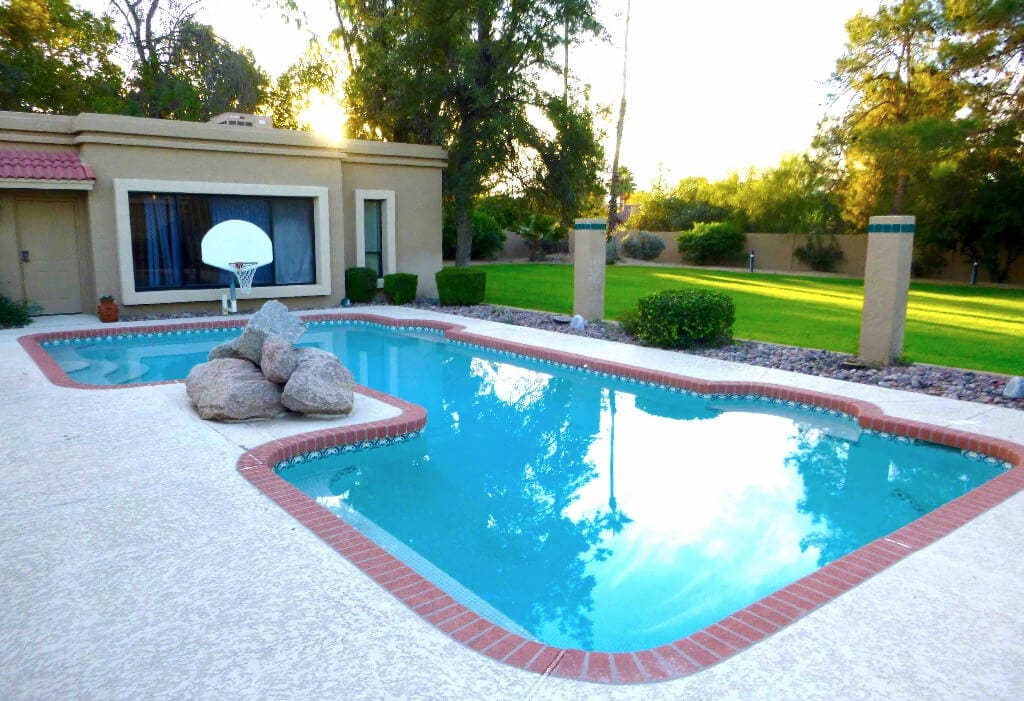
Sunlight destroys unprotected chlorine fast. NSW Health (2017) estimates that about 35% of free chlorine can be destroyed every hour an outdoor pool sits in sunlight, and that the hourly loss drops to about 5% at 20 mg/L (ppm) of cyanuric acid and about 2% at 40 mg/L.
That is why cyanuric acid is common in outdoor home pools: the pool needs less chlorine added and holds a steadier chlorine level between visits. Indoor pools and hot tubs do not get that benefit, because there is little or no sunlight to protect against.
Can you have too much cyanuric acid in a pool?
Yes. Cyanuric acid does not get used up or evaporate, so every dose of stabilized chlorine adds to the total until water is drained and replaced. As the level climbs, more of the chlorine is held in reserve and less is free to kill germs.
CDC researchers measured this with Crypto, a diarrhea-causing parasite that is highly tolerant of chlorine. At 20 ppm free chlorine, the time needed for a 3-log (99.9%) reduction rose to a CT value of about 17,800 with 8 ppm cyanuric acid and about 31,500 with 16 ppm, against CDC’s 15,300 target for water with no cyanuric acid. With about 100 ppm cyanuric acid, only a 0.8 to 1.4 log reduction was reached after 72 hours (Murphy et al., Environmental Science & Technology, 2015). CDC’s pool response page (2024) puts it plainly: “Disinfection times are longer in the presence of cyanuric acid.”
What cyanuric acid level should a pool have?
The answer depends on where the pool is and who regulates it. Public pools follow their state or local code; many codes borrow from the CDC Model Aquatic Health Code (MAHC), a voluntary model. Home pools have no single legal limit, but the public pool numbers are a sound guide.
| Standard | Cyanuric acid limit | Other rules |
|---|---|---|
| 2024 CDC Model Aquatic Health Code (voluntary model) | 90 ppm or less | Closure if cyanuric acid tops 300 ppm or the cyanuric acid to free chlorine ratio passes 45:1; free chlorine at least 2.0 ppm with cyanuric acid |
| Texas public pools (25 TAC §265.193, 2023) | 100 ppm | No cyanuric acid or stabilized chlorine in indoor pools, spas or therapy pools; weekly testing |
| Florida public pools (64E-9.004, 2023) | 100 mg/L in pools, 40 mg/L recommended; 40 mg/L in spa pools | Weekly testing when stabilized chlorine is used |
| Oregon public pools (OHA Fact Sheet 6, 2025) | 90 ppm or less | No cyanuric acid or stabilized chlorine in indoor venues after April 1, 2029 |
| CDC advice for home pools and hot tubs (2024) | No number given | At least 2 ppm free chlorine with cyanuric acid; no cyanuric acid in hot tubs |
Two numbers stand out. The 2024 MAHC inspection guide (CDC, 2024) lists cyanuric acid at 90 ppm or less as the operating limit, and treats 300 ppm as a closure level. The 300 ppm figure is a trigger for immediate action, not a safe target: CDC authors note that the effective dose for stabilizing chlorine “is far below 300 ppm” (Journal of Environmental Health, 2025).
How much chlorine do you need with cyanuric acid?
More cyanuric acid means you need more free chlorine to get the same germ kill. The 2024 MAHC closes a pool when the ratio of cyanuric acid to free chlorine passes 45:1 (CDC, 2024), and the Oregon Health Authority (2025) explains why: past that ratio, “the chlorine is unable to kill pathogens in the water.”
Here is what the 45:1 limit means in practice:
- At 45 ppm cyanuric acid, free chlorine must stay at 1 ppm or higher.
- At 90 ppm cyanuric acid, free chlorine must stay at 2 ppm or higher.
Some researchers recommend a stricter target. A 2019 risk model in Water (Falk et al.) recommends keeping cyanuric acid no more than 20 times the free chlorine level, which would mean at least 2 ppm free chlorine at 40 ppm cyanuric acid. For home pools that use cyanuric acid, CDC (2024) recommends at least 2 ppm free chlorine and a pH of 7.0 to 7.8.
How does cyanuric acid change the response to a diarrheal incident?
When someone has diarrhea in the pool, the water has to be held at a high chlorine level long enough to kill Crypto. For water with no stabilizer, CDC’s target is a CT value of 15,300, for example 20 ppm free chlorine for 12.75 hours. CDC’s 2018 fecal incident steps add steps when cyanuric acid is present:
- If cyanuric acid is 1 to 15 ppm, use unstabilized chlorine, keep pH at 7.5 or less and raise free chlorine to 20 ppm for 28 hours, 30 ppm for 18 hours or 40 ppm for 8.5 hours.
- If cyanuric acid is above 15 ppm, first lower it to 1 to 15 ppm “by draining partially and adding fresh water without chlorine stabilizer,” then follow the step above.
The 2024 MAHC adds dilution credits for draining and refilling during this response (CDC, 2025). Operators should check their state or local code for the exact steps that apply to them. For swimmers and parents, CDC’s Crypto prevention advice is covered in our guide to avoiding Crypto in swimming pools.
Should indoor pools and hot tubs use cyanuric acid?
Most guidance says no. CDC (2024) recommends “not using cyanuric acid or chlorine products with cyanuric acid in hot tubs.” Some states go further for public pools: Texas (25 TAC §265.193, amended 2023) bans cyanuric acid and stabilized chlorine in indoor pools, spas and therapy pools, and Oregon (2025) will not allow them in indoor aquatic venues after April 1, 2029.
How do you lower cyanuric acid in a pool?
Partial draining and refilling with fresh water is the standard fix. The Oregon Health Authority (2025) states that high cyanuric acid levels “can only be reduced by draining a portion of the aquatic venue.” The math is simple dilution: replacing about a quarter of the water with fresh water lowers the cyanuric acid level by about a quarter, so 80 ppm becomes about 60 ppm.
To keep the level from climbing back:
- Switch to an unstabilized chlorine product once cyanuric acid reaches your target. The Sacramento County Environmental Management Department notes that some chlorine products contain no stabilizer; check the label.
- Add stabilizer on its own only after testing, and only up to your target.
How often should you test cyanuric acid?
Test cyanuric acid at least weekly in any pool that uses stabilized chlorine. Public pool codes in Florida (64E-9.004, 2023) and Texas (2023) require weekly cyanuric acid tests when stabilized chlorine is used. Most test kits measure it with a turbidity test, where the sample turns cloudy in proportion to the cyanuric acid level. Because cyanuric acid changes the chlorine level you need, test free chlorine and pH more often: CDC (2024) recommends checking them at least twice a day for home pools.
Oxidation reduction potential (ORP) is another way to track how well chlorine is working; our guide to pool oxidation and ORP explains it. For the full list of numbers to balance, see the home pool chemistry quick guide, and for shocking a stabilized pool, see Pool Shock 101.
Where does Clear Comfort fit?
Clear Comfort’s hydroxyl-based AOP is a supplemental system: it works alongside a low chlorine residual, so the pool still needs chlorine and still follows the cyanuric acid and ratio rules above. Hydroxyl-based AOP does not add cyanuric acid to the water. In a 2014 University of Colorado Boulder lab study, Clear Comfort’s system inactivated up to 99.99% (4-log) of Cryptosporidium under the study’s test conditions, which adds a layer of protection against a parasite that cyanuric acid makes harder for chlorine to kill.
Frequently asked questions
What does cyanuric acid do in a pool?
Cyanuric acid bonds loosely with chlorine and protects it from being broken down by sunlight. NSW Health (2017) estimates unprotected chlorine can lose about 35% of its strength every hour in sun, so stabilized outdoor pools hold chlorine much longer.
What is a good cyanuric acid level for a pool?
The 2024 CDC Model Aquatic Health Code sets 90 ppm or less as the limit for public pools, and Florida recommends 40 ppm as a maximum for pools. Keep free chlorine high enough that cyanuric acid is no more than 45 times the free chlorine level.
Is high cyanuric acid dangerous?
High cyanuric acid slows how fast chlorine kills germs. A 2015 CDC study found that even 8 to 16 ppm of cyanuric acid lengthened the time needed to kill Cryptosporidium at 20 ppm chlorine, and the 2024 MAHC closes a public pool if cyanuric acid passes 300 ppm.
How do I lower cyanuric acid in my pool?
Drain part of the pool and refill it with fresh water; replacing about a quarter of the water lowers cyanuric acid by about a quarter. Then switch to an unstabilized chlorine product so the level does not climb back.
Should you use cyanuric acid in a hot tub or indoor pool?
CDC (2024) recommends not using cyanuric acid or stabilized chlorine in hot tubs, and Texas bans them in public indoor pools and spas. Indoor water gets little sunlight, so it gains little from stabilizer while still losing germ-killing speed.
Want a pool that needs less chlorine? See how Clear Comfort works in home pools and spas.