
Industrial cooling towers keep operations running – but without the right safeguards, they can become a serious health hazard.
If you operate industrial cooling towers, you don’t get the luxury of a slow day. Blowdown cycles, biocide dosing windows, water sampling, system uptime – none of it is optional. Because when the tower goes down, so does production.
Even well-run facilities have biological risk. Legionella doesn’t announce itself. By the time it shows up in a water sample, it’s already had time to spread. When it does, you’re not just dealing with a biological event. You’re looking at a regulatory shutdown, an investigation, and a paper trail with your name on it.
The risk is real – but so is the solution. Read on to know where conventional water treatment programs break down, what Legionella risk develops, and how to stay ahead of it for good.
A Preventable Crisis
The South Bronx Legionnaires’ outbreak was the second-largest community outbreak in US history. What happened there – and why – is a lesson every industrial facility operator needs to understand.
In 2015, a contaminated cooling tower at the South Bronx Opera House Hotel became a breeding ground for Legionella. An evaporative cooling system to regulate temperature failed because of inadequate water treatment – and became a public health crisis.
The cooling tower failures included:
- Inconsistent or insufficient biocide use
- Lack of proper system monitoring
- Poor maintenance and cleaning practices
As a result, bacteria multiplied within the system and were released into the air through aerosolized water droplets. Employees and nearby residents were exposed simply by breathing contaminated air.
The result: Legionnaires 138 infections and 16 fatalities.
These were not inevitable outcomes – they were the result of gaps in a conventional treatment program. Gaps that exist in facilities everywhere. The question isn’t whether your system has those gaps. It’s whether you can see them before Legionella does.
Why Are Cooling Towers High-Risk for Legionella?
Cooling towers naturally create the perfect environment for microbial growth:
- Warm water temperatures
- Constant air exposure
- Organic material accumulation
- Recirculating water systems
Without proper water treatment, biofilm forms inside the cooling system. Biofilm gives a protective environment where harmful bacteria like Legionella can thrive and multiply.
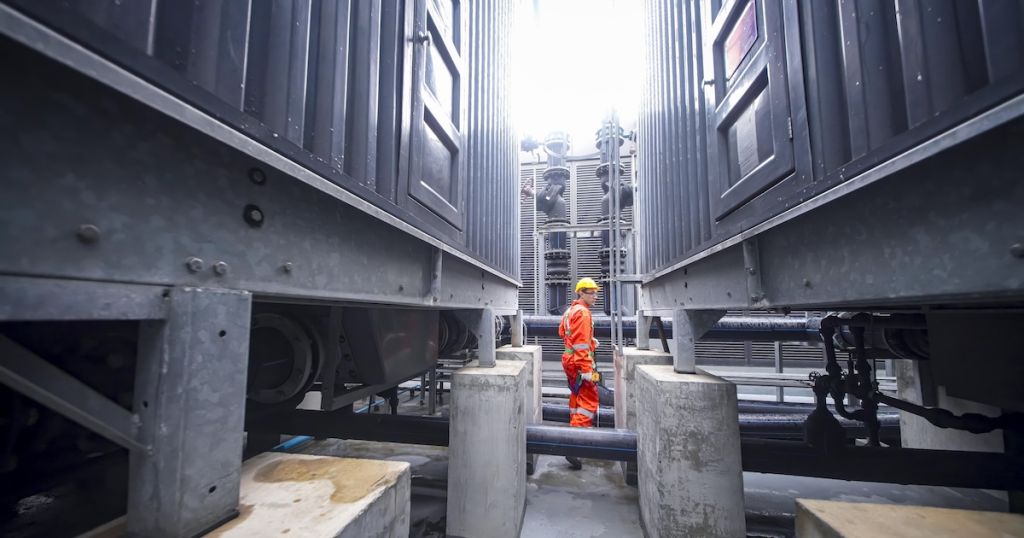
For maintenance personnel, this is especially dangerous. Routine inspections and repairs mean direct contact with a potentially contaminated system – often without knowing it.
What are the Limits of Traditional Water Treatment?
Most facilities rely on chemical treatment programs to control bacteria, scale and corrosion. But without additional protection outside of chemicals alone, these programs have more failure points than most operators realize.
While these can be effective, they often depend heavily on:
- Manual monitoring and adjustment
- Consistent chemical dosing
- Proper storage and handling procedures
- Managing chemical interactions
- Chemicals with limited biofilm penetration (where Legionella lives)
If any part of that process breaks down – as it did in the South Bronx case – the system becomes vulnerable. Human error, inconsistent application, or simple oversight can allow dangerous conditions to develop quickly.
To address exactly these gaps, many have added AOP technology.
How Does AOP Address Legionella Risk in Cooling Towers?
Most chemical-heavy water treatment programs react to biological risk. AOP prevents it at the root cause.
Advanced Oxidation Process (AOP) is a water treatment technology that covers the gaps of traditional chemical programs. AOP acts as a non-chemical biocide. It reduces your dependence on chemicals by taking over the oxidation work your chemical program struggles to do alone.
From an operator perspective, AOP runs continuously with minimal oversight. It reduces the need to monitor, handle and dose chemicals. Additionally, it can typically be integrated without operational downtime.
How Does AOP Work?
Instead of relying primarily on stored chemicals, cooling tower AOP water treatment generates powerful oxidizers. These oxidizers, known as hydroxyl radicals, work at a molecular level to destroy harmful organisms on contact in plumbing. Hydroxyl radicals have a higher oxidation potential than ozone, chlorine, or bromine. This makes them better equipped to penetrate and break down biofilm where Legionella thrives.
Why AOP Works Where Chemicals Fall Short
Here is what makes AOP more effective for cooling tower water treatment.
1. Continuous Disinfection
AOP systems operate in real time, constantly treating circulating water. This eliminates the gaps and risks that can occur with periodic chemical dosing.
2. Biofilm Control
By breaking down biofilm, AOP removes the protective environment where Legionella bacteria thrive – something that chemical treatments often struggle to eliminate.
3. Reduced Chemical Dependency
Facilities can significantly cut back or eliminate chemical use, reducing the risk of improper dosing and minimizing hazards for maintenance staff.
4. Consistent Performance
Because AOP systems are automated, they remove much of the variability and human error associated with traditional water treatment programs, leading to better consistency and a more predictable management schedule.
How Could the South Bronx Outbreak Have Been Prevented?
Had AOP been running at the South Bronx Opera House Hotel in 2015, the outcome could have been very different:
- Legionella bacteria would have been actively destroyed before reaching dangerous levels
- Biofilm buildup would have been minimized, eliminating the bacteria’s primary habitat
- Continuous treatment would have reduced reliance on manual intervention, closing the gaps that allowed contamination to occur and reducing exposure risk for response teams.
- Maintenance teams would have had greater visibility and control, reducing the likelihood of oversight
In short, AOP technology could have transformed a vulnerable system into a controlled, consistently treated environment.
A Better Path Forward for Maintenance Teams
For today’s maintenance departments, the takeaway is clear: relying solely on traditional chemical programs introduces risk – not just to equipment, but to people.
By adopting advanced cooling tower technologies, like AOP water treatment, facilities can:
- Improve cooling system reliability
- Reduce emergency situations
- Lower chemical handling risks
- Protect employee health
- Ensure regulatory compliance
Most importantly, AOP can circumvent crises before they happen, rather than staff having to manage the issues after the fact.
Final Thoughts
The South Bronx outbreak serves as a powerful reminder that water treatment failures can have real and devastating consequences. Cooling towers must be treated not only as mechanical systems, but as potential health risks if not properly maintained.
Cooling tower AOP water treatment represents a smarter, safer way forward. It gives maintenance teams the tools they need to protect both their systems and the people who rely on them every day, because at the end of the day, effective water treatment is as much about safety and compliance as it is about performance.
Interested in reducing Legionella risk at your facility? See how AOP water treatment compares to traditional chemical programs for cooling towers. See the full comparison here »
Frequently Asked Questions
Can AOP technology prevent Legionella growth in cooling towers? Yes. Advanced Oxidation Process (AOP) technology continuously generates hydroxyl radicals that destroy Legionella bacteria and break down biofilm at the molecular level, preventing dangerous concentrations from developing in cooling tower water systems.
What is Advanced Oxidation Process (AOP) water treatment? AOP is an automated water treatment method that generates hydroxyl radicals — powerful oxidizers that neutralize harmful microorganisms, including Legionella, in real time without relying primarily on stored chemicals.
Why are cooling towers a high risk for Legionella outbreaks? Cooling towers maintain warm, recirculating water with constant air exposure and organic material accumulation — conditions that are ideal for Legionella bacteria and biofilm formation. When water treatment is inconsistent or inadequate, bacteria can multiply and be dispersed as aerosolized water droplets.
What caused the 2015 South Bronx Legionnaires’ disease outbreak? The outbreak was caused by a contaminated cooling tower where water treatment failures — including inconsistent biocide use, poor monitoring, and inadequate cleaning — allowed Legionella to multiply and be released into the surrounding air, infecting 138 people and killing 16.
How does AOP differ from traditional chemical water treatment for cooling towers? Traditional chemical treatment depends on manual monitoring, consistent dosing, and proper chemical handling — all points of potential human error. AOP systems are automated and operate continuously, eliminating the gaps in coverage that can allow Legionella to reach dangerous levels.