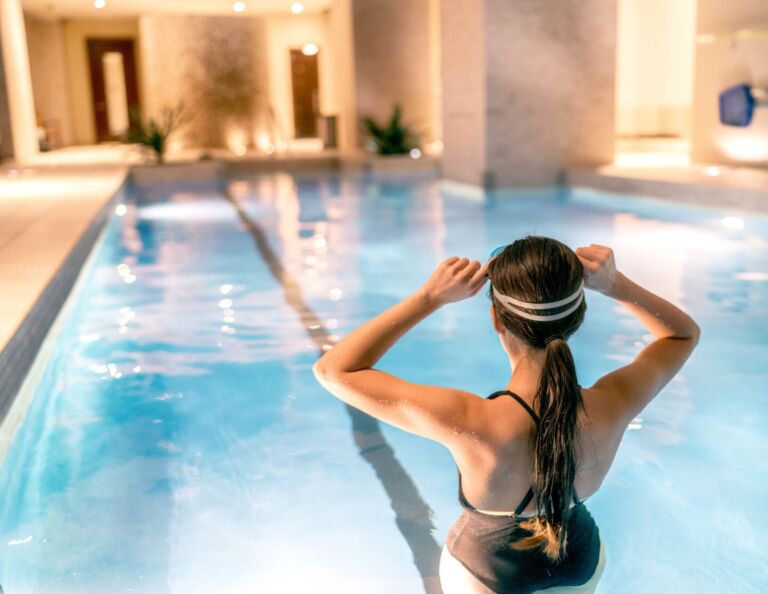


Swimming can be a helpful part of an active routine for a child with ADHD. Research on exercise and ADHD is encouraging: a 2023 review of 44 studies found that regular exercise improved focus-related thinking skills and reduced hyperactivity and inattention, although the studies were small and varied, and swimming does not replace the treatment plan a child’s doctor recommends.
This guide covers what the research says, why many families and coaches see swimming as a good fit, what Michael Phelps has shared about his own experience, and how to get a child with ADHD started safely.
How common is ADHD in children?
ADHD is one of the most common childhood conditions. According to the CDC’s ADHD data page (reviewed July 2026), an estimated 7 million U.S. children aged 3 to 17, or 11.7%, had a current ADHD diagnosis in 2024, based on HRSA’s National Survey of Children’s Health.
ADHD treatment follows clear medical guidance. The CDC’s ADHD treatment page (reviewed October 2026) explains that the American Academy of Pediatrics recommends behavior therapy first for children under 6, with parent training in behavior management as the most effective type. For children 6 and older, the recommendation is medication and behavior therapy together. Exercise, including swimming, fits alongside that plan.
What does research say about exercise and ADHD?
Exercise shows real promise for children with ADHD. A 2023 systematic review and network meta-analysis in Frontiers in Public Health by Zhu and colleagues pooled 44 studies with 1,757 children and adolescents with ADHD and found:
- Exercise overall improved executive functions, the thinking skills behind planning, self-control and staying on task.
- Exercise overall reduced hyperactivity and impulsivity, and reduced inattention.
- Closed-skill aerobic activities, a group that includes swimming, running and cycling, ranked highest for reducing hyperactivity, impulsivity and inattention.
- Open-skill sports such as soccer, tennis and table tennis ranked highest for executive functions.
The authors urged caution. Many of the studies were small, few could blind participants, and results varied widely between studies. Their practical advice was to encourage children with ADHD to do the physical activities they enjoy most, because enjoyment helps them stick with it.
Is there research on swimming and ADHD specifically?
Yes, though it is early. A 2022 randomized trial in the International Journal of Environmental Research and Public Health by Hattabi and colleagues assigned 40 children with ADHD, ages 9 to 12, from 10 primary schools in Tunisia to either a 12-week, games-based swimming program (three 90-minute sessions a week) or a group with no aquatic activities. The swimming group got faster on a test of inhibitory control, the ability to hold back an automatic response, while the other group did not change, and parents of the swimmers reported fewer attention and behavior problems. The swimmers’ reading and math grades and fitness also improved.
The study was small, with 20 children in each group, and schools rather than individual children were assigned at random, so it suggests a benefit without proving one. Larger swimming-specific trials are still needed.
Why might swimming suit a child with ADHD?
Families and coaches often point to a few features of swimming that can work well for kids who have a lot of energy or trouble focusing:
- It burns energy. Swimming works the whole body, and a hard practice can leave a busy child calmer afterward.
- It has built-in structure. Lessons and swim team practices follow a set routine of warm-up, drills and laps, with clear, short goals.
- It limits distractions. With their face in the water, swimmers focus on breathing, counting strokes and the wall ahead.
- Progress is easy to see. Kids can track faster times, new strokes and longer distances, which can help motivation.
Every child is different. Some kids with ADHD love the routine of swim practice; others do better with team sports or martial arts. The best activity is the one a child enjoys enough to keep doing.
What did swimming do for Michael Phelps?
Michael Phelps, the most decorated Olympian in history, has spoken openly about ADHD. ADDitude magazine (updated July 2024) reports that he was diagnosed at age 9, and that his schedule of practices and meets gave his life structure. In an interview shared by Understood, Phelps said that “being in the pool slowed down my mind” and that “In the water, I felt, for the first time, in control.”
Phelps’ story is one person’s experience, and his treatment choices were made with his family and doctors. It shows how a structured sport can help a child channel energy, and it is a good conversation starter for kids who feel different because of ADHD.
How can you get a child with ADHD started in swimming?
 Start with a setting that matches your child’s attention span and builds confidence:
- Talk with your child’s doctor about adding a new activity, especially if your child takes medication or has other health needs.
- Pick lessons with a patient instructor and a small class. Tell the instructor about your child’s needs so they can give short, clear directions.
- Keep early sessions short and end on a success, then add time as your child’s stamina and interest grow.
- Use a steady routine: the same days, the same time and the same steps before and after swimming.
- Let your child lead. If they love it, a swim team or camp can add structure; our guide to the benefits of swim camps explains what to look for.
For younger kids who are still learning, these 10 tips for teaching your children to swim cover the first steps, from blowing bubbles to floating on the back.
How do you keep an active child safe around water?
Close, constant supervision matters for every child, and it matters even more for kids who act quickly or wander. According to the CDC’s drowning facts (reviewed January 2026), more children ages 1 to 4 die from drowning than from any other cause, and drowning is the second leading cause of unintentional injury death for children ages 5 to 14.
The CDC’s drowning prevention guidance (reviewed September 2025) recommends:
- Formal swim lessons, which can reduce drowning risk. Children who have had lessons still need close and constant supervision.
- A designated adult who watches the water closely, even when lifeguards are present.
- A four-sided fence at least four feet high with self-closing, self-latching gates around home pools.
- Life jackets for weaker swimmers, since air-filled or foam toys are not safety devices.
Frequently asked questions
Is swimming good for kids with ADHD?
Swimming can be a good fit for many kids with ADHD. A 2023 review of 44 studies found that exercise improved executive functions and reduced ADHD symptoms in children and adolescents, and a small 2022 randomized trial found that a 12-week swimming program improved inhibitory control and reduced parent-reported attention problems, though more and larger studies are still needed.
Can swimming replace ADHD medication or therapy?
No. The CDC, following American Academy of Pediatrics guidance, recommends behavior therapy first for children under 6 and medication with behavior therapy for children 6 and older. Swimming and other exercise can be added to that plan; talk with your child’s doctor before changing any treatment.
How often should a child with ADHD swim?
There is no set prescription. The 2022 swimming trial used three 90-minute sessions a week for 12 weeks, and the 2023 review found the most important factor was an activity the child enjoys enough to keep doing, so a regular weekly routine is a reasonable place to start.
Did Michael Phelps have ADHD?
Yes. ADDitude reports that Michael Phelps was diagnosed with ADHD at age 9, and Phelps has said that being in the pool “slowed down my mind.” His practice schedule gave his days a structure that helped him focus.
What other sports can help kids with ADHD?
In the 2023 review, closed-skill aerobic activities such as swimming, running and cycling ranked highest for easing hyperactivity and inattention, while open-skill sports such as soccer and tennis ranked highest for executive functions. The best choice is the activity your child likes enough to stick with.
Explore Clear Comfort for a home pool your family can enjoy every day.