

You get your pool water tested – and suddenly your pool has phosphates. And now, you’re being told to fix it.
If you’ve ever had your pool water tested at a store, you’ve probably been told you have phosphates. The printout might even recommend a pricey chemical to fix it right away. For many pool owners, that raises two questions:
- What exactly are phosphates, and should I be worried about them?
- Do I need to remove them from my pool, or is this just another add-on chemical?
The short answer: phosphates are nutrients that can contribute to algae growth, but they’re not the enemy they’re often made out to be. With proper maintenance, many pools never require special phosphate removers. Still, in some situations, they can be helpful. Let’s break it down so you know when (and how) to act.
What Are Phosphates in a Pool?
Phosphates are compounds containing phosphorus, a nutrient that plants (and yes, algae) love. They sneak into your pool water from a variety of everyday sources:
- Leaves, grass clippings, and pollen
- Fertilizers or yard run-off
- Swimmers’ lotions and detergents
- Rain and even tap water
The critical thing to remember is this: phosphates themselves don’t hurt swimmers. They’re not toxic or unsafe to touch. The concern comes from the fact that algae can use them as “food.”
Do Phosphates Matter?
Here’s where a lot of pool owners get confused. Some companies make phosphates sound like the root cause of algae problems. In reality:
- Phosphates don’t create algae on their own.
- Chlorine kills algae – and a properly chlorinated pool usually stays clear, regardless of phosphate levels.
- Phosphates only become a problem when chlorine can’t keep up, such as during very hot weather, heavy swimmer loads, or poor circulation.
Think of phosphates like fertilizer in your garden. If no seeds are planted, the fertilizer doesn’t matter. However, if algae spores infiltrate your pool (and they always do), high phosphates can help them multiply more rapidly if chlorine levels drop.
Bottom line: Most pools with balanced chemistry never notice phosphates, even if levels are high.
Testing for Phosphates
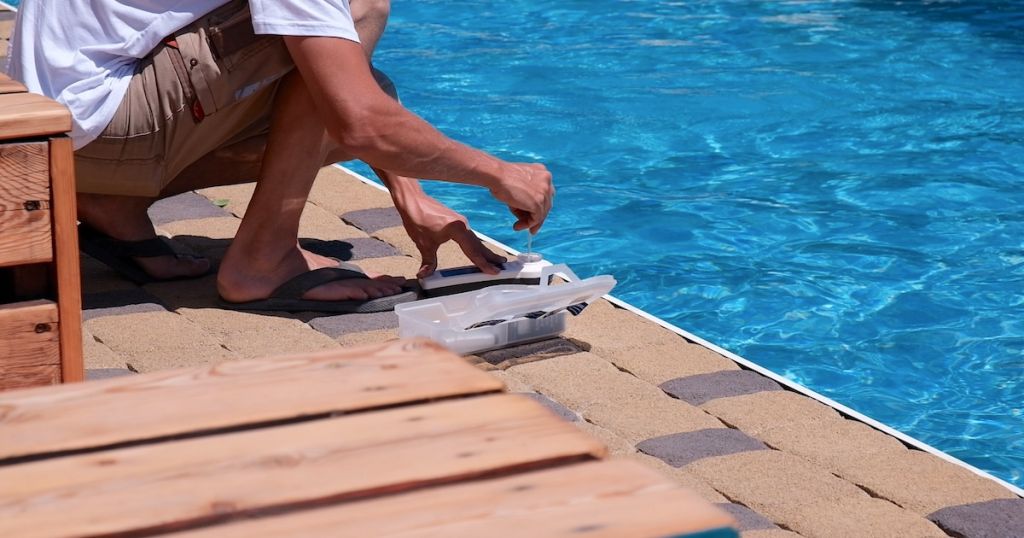
If you’re curious, you can test your phosphate levels in two ways:
- Pool store test – Many pool stores offer free water tests that automatically measure phosphates.
- At-home test kits – Inexpensive kits are available online and give results in parts per billion (ppb).
A small amount of phosphate in your pool is normal. Many pools measure 100–500 ppb without any problems. Once levels climb above 500 ppb, you may start noticing algae that’s harder to control. That’s usually when a phosphate remover makes sense.
How to Remove Phosphates from a Pool (Step-by-Step)
Here’s the reassuring part: you don’t always need to remove phosphates at all. You have two main strategies:
1. Control algae with good maintenance
This is the approach most DIY homeowners can stick with:
- Maintain chlorine levels within the recommended range (1–3 ppm).
- Test and balance pH and alkalinity regularly.
- Run your pump for a sufficient amount of time each day to ensure good circulation.
- Skim, brush, and vacuum to remove debris (which can introduce phosphates).
- Use algaecide only as needed.
With consistent maintenance, you can keep your pool clear and healthy, even if phosphates are present.
2. Use a phosphate remover (optional tool)
Phosphate removers are specialized chemicals (usually lanthanum-based) that bind to phosphates, allowing them to be filtered out of the water. They can be helpful if:
- You’ve battled repeated algae blooms despite good chlorine levels.
- You live in an area with consistently high phosphate levels in the water supply.
- Your pool is exposed to heavy leaf or fertilizer debris.
They’re not meant to replace chlorine or sanitizers – just to reduce algae’s “food source” so your sanitizer has an easier job.
Step-by-Step: How to Use a Phosphate Remover
If you decide your pool needs it, here’s how to do it right:
- Test first. Confirm phosphates are high (1000+ ppb).
- Balance your pool chemistry. Ensure that pH, alkalinity, and chlorine levels are within the recommended range.
- Add phosphate remover. Follow the dosage on the bottle carefully. A little goes a long way.
- Expect cloudiness. As phosphates bind and drop out of solution, the water may turn cloudy – this is normal.
- Clean your filter. The filter traps the phosphate residue, so you’ll likely need to backwash or clean your cartridge afterward.
- Retest later. Recheck phosphate levels after a few days to see the difference.
Pro tip: Don’t panic if your phosphate test still shows “some” phosphates afterward. The goal isn’t necessarily zero – just reducing levels enough that algae doesn’t gain the upper hand.
Common Myths About Phosphates
- “Any amount of phosphates causes algae.”
Not true. Pools with normal sanitizer levels can remain algae-free with phosphates in the water. - “You must add phosphate remover every week.”
Nope. Unlike chlorine, phosphate removers aren’t a constant need. They’re a problem-solver, not a routine chemical. - “High phosphates mean my pool isn’t safe to swim in.”
False. Phosphates don’t affect swimmers directly. It’s the algae growth they can feed on that becomes the issue.
The Bottom Line
Phosphates in your pool aren’t dangerous, and they’re not automatically a problem. They’re simply nutrients that can make algae harder to control if your sanitizer slips. For most DIY homeowners, the best defense is the basics:
- Keep chlorine balanced.
- Stay on top of brushing, vacuuming, and regular filter maintenance.
- Use a phosphate remover if your levels are above 500 ppb and you’re battling algae despite good maintenance.
Think of phosphate removers as a tool in your pool-care toolbox – helpful in certain situations, but not something you need to rely on every week. With a bit of knowledge and consistent care, you can keep your pool clear, blue, and stress-free all season long.
Takeaway for DIY Pool Owners: Don’t let phosphate talk stress you out. Focus on water balance first. If you’re still battling algae, consider a phosphate remover as a backup.
Curious how to simplify pool care and reduce ongoing chemical use? Read our guide: Top 5 Reasons to Choose an AOP Pool for Your Home.